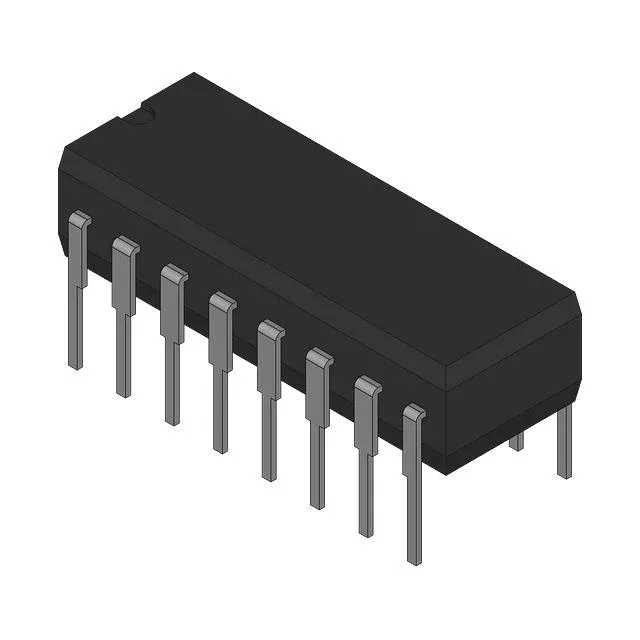
The Maxim Integrated MAX470CPE is a quad-channel video buffer designed specifically for analog video signal distribution and buffering in 75 Ω cable-drive applications. Each of the four circuits delivers a 300 V/µs slew rate and 90 MHz -3 dB bandwidth, enough to pass composite video, component video (YPbPr), or standard-definition broadcast signals without visible slew-rate distortion. Packaged in a 16-pin DIP with 0.300" body width and through-hole leads, this part suits socketed prototype boards, legacy equipment repairs, or low-volume production runs where rework access matters.
A 300 V/µs slew rate means this buffer can swing a 2 V peak-to-peak video signal (typical for 1 V composite plus sync) in under 7 ns, well within the horizontal blanking interval of any standard-definition format. The 90 MHz -3 dB bandwidth provides flat gain through the 6 MHz luminance carrier of PAL/NTSC and leaves headroom for higher-resolution analog formats like 1080i component video. In practice, these two specs together ensure that the buffer does not become the limiting factor in the video path — the cable, connector, or ADC will hit their noise floor before this part introduces slew-induced nonlinearity.
Package and supply rail — design-in notes for a 5 V system
Each of the four buffers draws from the same 100 mA supply current budget, so a single 5 V linear regulator sized for 500 mA (including margin) handles the entire IC. The through-hole body also makes it straightforward to probe or replace during debug, a practical advantage in bench instruments or field-serviceable video gear.
Lifecycle and compliance — still active, but watch the RoHS status
This is typical for legacy through-hole video parts and is acceptable under many industrial, test-equipment, and military RoHS exemptions — but if your BOM requires full RoHS 10/10 compliance for consumer or medical markets, verify the exemption status with your compliance team before committing the line.
Because the MAX470CPE is an active, RoHS-non-compliant through-hole video buffer, it is not a high-volume commodity part stocked on every distributor shelf — but it is consistently available through the specialty and legacy-component supply chain. Submit an RFQ for your target quantity; the quote will reflect real-time market pricing and lead time from verified sources.