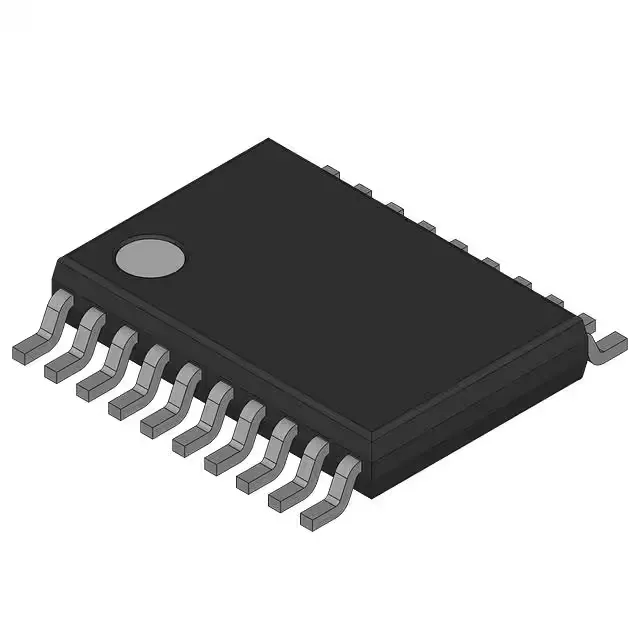
What this triple op-amp is and who specifies it
The Maxim MAX4394EUD is a triple-channel, general-purpose operational amplifier in a 14-pin TSSOP package. Its headline spec is a 500 V/µs slew rate, which puts it in the class of high-speed amplifiers used for video distribution, pulse amplification, and fast signal conditioning — not the sort of part you drop into a slow feedback loop. The three channels share a common supply range of 4.5 V to 11 V, and each channel draws 6 mA quiescent current, so the full IC pulls 18 mA when all three are active.
Slew rate — the spec that defines the application
A 500 V/µs slew rate means this amplifier can reproduce a 5 V peak-to-peak square wave with a rise time of about 10 ns. That is fast enough for standard-definition video (NTSC/PAL) and for driving the analog front-end of a high-speed ADC where the input signal must settle before the sample clock. The trade-off is input bias current: 15 µA is high compared to a precision CMOS op-amp, so you need to account for offset voltage from source impedance in the gain network. For a unity-gain buffer driving a 75 Ω cable, that bias current is negligible; for a 100 kΩ feedback network it adds 1.5 V of offset — not workable.
Package and temperature grade — where it goes on the board
The 14-TSSOP body measures 4.40 mm wide, a common footprint shared with many Maxim video-amplifier family parts. Surface-mount only — no through-hole option. If your design lives in a climate-controlled rack, the temperature margin is generous; if it sits behind a sunlit panel in a warehouse, the 85°C top end is the limit, not a safety buffer.
That means it is still a safe BOM line for new production runs — no LTB deadline to schedule around.