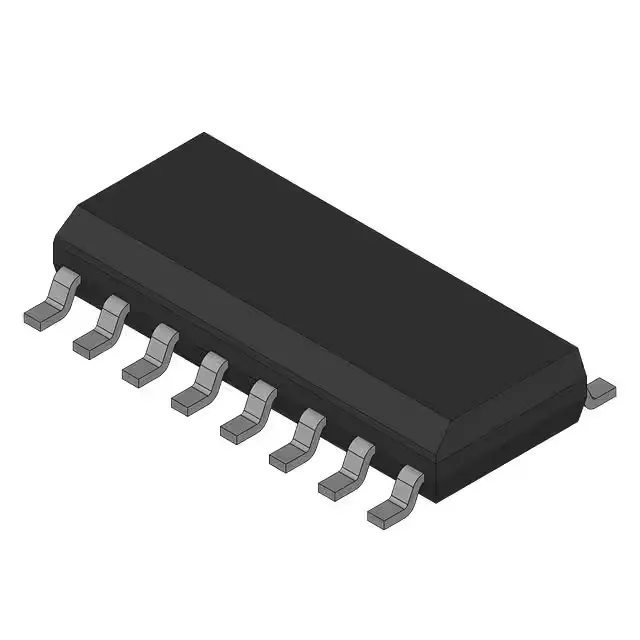
Analog Devices MAX4383ESE — Analog & Data Acquisition

MAX4383ESE 210 MHz Voltage Feedback Op-Amp, 485V/µs, Quad

MPNMAX4383ESE
End of Life

Maxim MAX4383ESE quad voltage-feedback op-amp, 210 MHz -3dB bandwidth, 485V/µs slew rate, rail-to-rail output, 4.5V to 11V supply, 7.5mA per channel, -40°C to 85°C, 16-SOIC.

$1.94Ref. price · indicative, final on quote
Packaging16-SOIC (0.154", 3.90mm Width)
RoHSRoHS non-compliant
Independent supplier — new & surplus stockAuthenticity-screened · ESD-safe packingListing updated Aug 2026

Specifications

MAX4383ESE specifications
ParameterValue
Output typeRail-to-Rail
MountingSurface Mount
Amplifier typeVoltage Feedback
Voltage - input offset3 mV
Voltage - supply span4.5 V
Current - supply7.5mA (x4 Channels)
Current - input bias8.5 µA
Current - output (Channel)75 mA
Operating temperature-40°C ~ 85°C
-3db bandwidth210 MHz
PackageBulk
Slew rate485V/µs
Case16-SOIC (0.154\", 3.90mm Width)
Number of circuits4

Product details

Power budget per channel for dense boards

Each of the four amplifiers draws 7.5 mA from the supply, totaling 30 mA for the package. For a multi-channel board running from a 5 V rail, that's 150 mW dissipation in the 16-SOIC — manageable with basic airflow but worth checking against the thermal impedance if the board is sealed. The supply range spans 4.5 V to 11 V, so it runs comfortably on 5 V single-supply rails common in video systems.

Rail-to-rail output and input offset considerations

Output swings rail-to-rail, which helps maintain signal headroom in low-voltage designs. These are not precision-grade figures; if sub-millivolt offset or picoamp bias is needed, look at a dedicated precision amplifier instead.

Frequently asked questions

Is the MAX4383ESE rail-to-rail?

Yes, the MAX4383ESE features a rail-to-rail output stage, allowing the output swing to reach close to the supply rails for maximum dynamic range.