The MAX4373TEUA+T: ROHS3 compliant per the lifecycle entry, which covers the standard restriction of hazardous substances directive for European and most global markets — no exemption paperwork or special handling is required at incoming inspection.
What the integrated amplifier, comparator, and reference means for a current-sense circuit
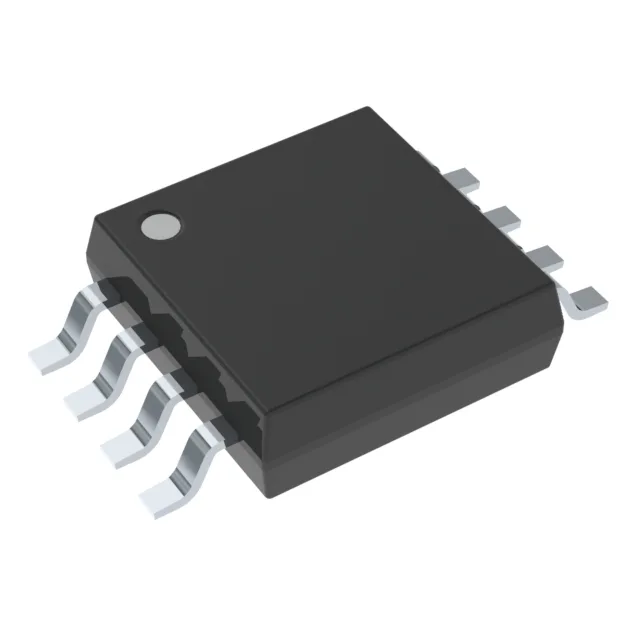
The MAX4373TEUA+T integrates a current-sense amplifier, a comparator, and a voltage reference in a single 8-uMAX/uSOP package. Instead of sourcing three separate ICs plus external resistor dividers for the threshold, this part handles the full overcurrent detection chain — the amplifier scales the shunt voltage, the reference sets the trip point, and the comparator drives the fault output. Targeted at current sensing and power management applications, this part is typically placed across a sense resistor on the high-side or low-side rail to monitor load current and assert a logic output when the current exceeds a programmed threshold. The integrated reference eliminates the drift and tolerance stack-up of a discrete resistor divider.
Package and board-fit for the MAX4373TEUA+T
The compact footprint suits space-constrained power-management boards where the current-sense circuit must sit close to the shunt resistor to minimize Kelvin-sense loop inductance.