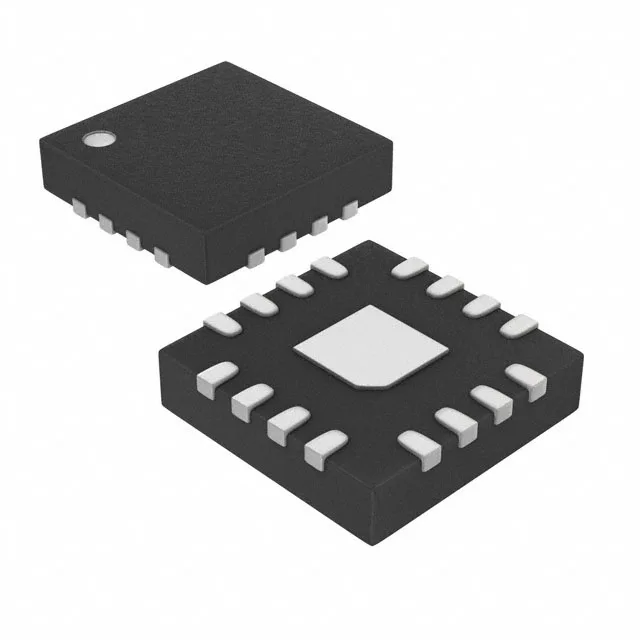
Analog Devices MAX4206ETE+T — Discrete Semiconductors

MAX4206ETE+T Logarithmic Amplifier, 5 MHz, 12V/µs, 16-TQFN

MPNMAX4206ETE+T
End of Life

Maxim MAX4206ETE+T, Logarithmic Amplifier, 1 Circuit, 5 MHz Gain Bandwidth, 12V/µs Slew Rate, 2.7 V to 11 V Supply, -40°C to 85°C, 16-TQFN Exposed Pad, Surface Mount.

$8.8Ref. price · indicative, final on quote
Packaging16-WQFN Exposed Pad
RoHSROHS3 Compliant
Independent supplier — new & surplus stockAuthenticity-screened · ESD-safe packingListing updated Aug 2026

Specifications

MAX4206ETE+T specifications
ParameterValue
MountingSurface Mount
Amplifier typeLogarithmic
Voltage - input offset1 mV
Voltage - supply span2.7 V
Current - supply5mA
Current - output (Channel)58 mA
Operating temperature-40°C ~ 85°C
Gain bandwidth product5 MHz
PackageTape & Reel (TR); Cut Tape (CT)
Slew rate12V/µs
Case16-WQFN Exposed Pad
Number of circuits1

Product details

The MAX4206ETE+T is a single-channel logarithmic amplifier in a 16-TQFN (4x4 mm) package.

The 5 MHz gain-bandwidth product sets the upper frequency where the logarithmic transfer function remains accurate. For a log amp, this is not a small-signal bandwidth in the op-amp sense — it defines the maximum frequency of the input signal before the log-conformance error rises. The 12V/µs slew rate ensures the output can track fast input transients without slew-induced distortion; paired with the 5 MHz GBW, this part handles signals up to several hundred kilohertz with acceptable log accuracy.

For dual-sourcing or a pin-compatible alternate, there is no official second source listed — the part is unique to Maxim's log amp portfolio.

Frequently asked questions

What is the bandwidth of MAX4206ETE+T?

The gain-bandwidth product is 5 MHz. This defines the frequency where the logarithmic transfer function starts to deviate; practical input signals up to several hundred kilohertz maintain good log conformance.

What is the slew rate of MAX4206ETE+T?

The slew rate is 12V/µs. This allows the output to follow fast input transients without slew-induced distortion within the bandwidth limits.