That is a hard constraint for any design that must meet EU RoHS or similar directives. It does not mean the part is defective — it means the die attach or lead finish contains lead, typically for high-reliability or legacy applications where exemption applies. If your BOM requires RoHS compliance, this op-amp is not a fit; for maintenance, repair, or exempt industrial gear, it is still a valid choice. The lifecycle status is Active, so there is no imminent obsolescence concern.
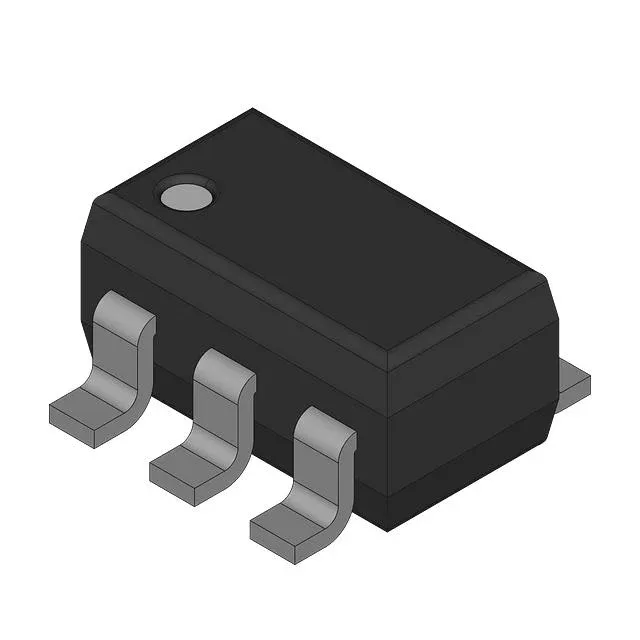
The MAX4175BEEUK comes in a SOT-23-5 surface-mount package (SC-74A, SOT-753 equivalent). It is a five-pin, small-outline transistor package — about 2.9 mm by 1.6 mm — common for op-amps in space-constrained designs.
The 2 MHz gain-bandwidth product and 590 kHz -3 dB bandwidth tell you this op-amp is for low-frequency work — audio, sensor conditioning, control loops. The 0.7V/µs slew rate means a full 2 V output step takes about 2.8 µs; do not expect to drive fast ADC inputs or video lines. Input bias current is just 50 pA, so it is fine with high-impedance sources like photodiodes or pH probes, though the 500 µV input offset voltage means you will need to account for that DC error in precision circuits. Supply current of 355 µA keeps battery drain low.