Its 400 MHz -3 dB bandwidth and 1200 V/µs slew rate target high-speed signal chains — video distribution, ADC front-end drivers, and RF buffer stages where settling time and pulse fidelity matter more than DC precision. The 9 V to 11 V supply span means it runs from a single 10 V or 12 V rail, not the ±5 V common in older video amps. Supply draw is 5 mA, reasonable for a 400 MHz part; output can source or sink 80 mA into a 50 Ω or 75 Ω back-terminated line.
For a 2 Vpp signal at 100 MHz, that's enough headroom to avoid slew-induced distortion — the part stays linear well past the small-signal bandwidth. If you are driving a high-speed ADC or a cable, this rating is the one that keeps the harmonic content clean. The current-feedback topology also means the bandwidth stays relatively flat as you increase the gain, unlike a voltage-feedback amp where gain-bandwidth product forces a trade-off.
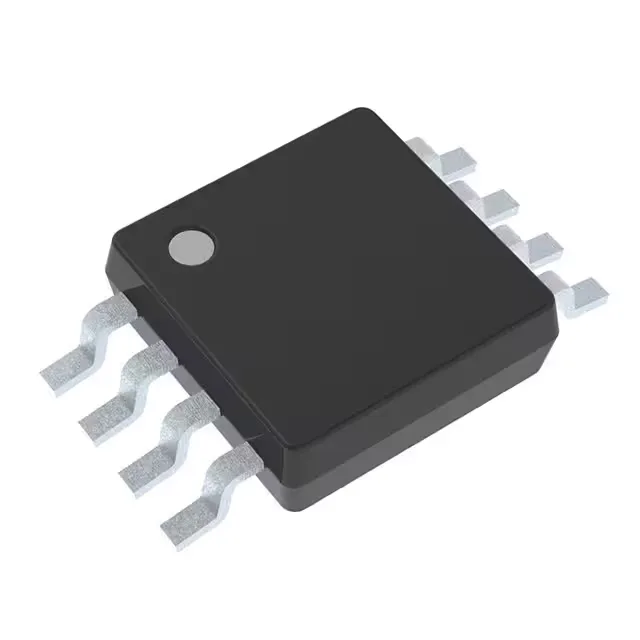
The MAX4112EUA ships in an 8-µMAX package, which is the Maxim trademark for an 8-lead MSOP with 0.65 mm pitch and a 3.00 mm body width. It is surface-mount only. The listed shipping medium is Bulk — tubes or cut tape, not a reel. For a production line that needs Tape & Reel, confirm the packing option with your distributor; the Bulk variant is fine for prototypes and small builds but adds a hand-place step for volume. MSOP-8 is a common footprint shared by many op-amps and comparators, so a layout change for a second source is usually a BOM edit, not a board spin.
Lifecycle and compliance note
That rules it out for EU RoHS-exempted applications unless you have a specific exemption claim. For non-RoHS builds (military, aerospace, some industrial), this is not a blocker, but the BOM compliance statement needs to flag it.