500 kHz GBW quad op-amp for multi-channel signal conditioning
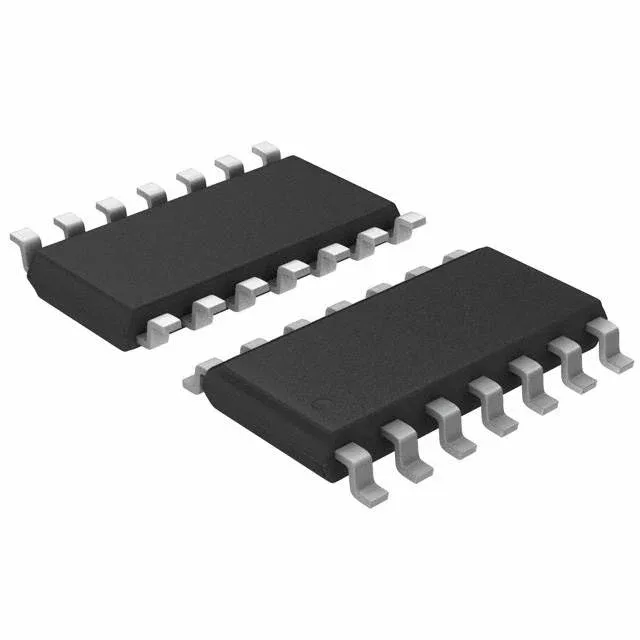
The MAX4094ASD+ from Analog Devices is a quad general-purpose operational amplifier with a 500 kHz gain-bandwidth product and a 0.2 V/µs slew rate, packaged in a 14-SOIC surface-mount package. With four circuits in one package and a supply current of just 130 µA per channel, this part suits multi-channel sensor interfaces, filter stages, or buffer arrays where board space and power budget are tight. The rail-to-rail output stage delivers the full supply swing, which matters when running from a 2.7 V to 6 V single supply — common for single-cell Li-ion or 5 V logic rails — because every millivolt of headroom counts at low voltages.
A 0.2 V/µs slew rate means the output can swing 1 V in 5 µs — fine for DC or slow-moving signals, but a 1 V peak-to-peak sine wave at 30 kHz would start showing distortion because the required slew rate exceeds the rated limit. Input offset voltage is a tight 30 µV typical, which keeps DC errors low in precision applications like thermocouple amplifiers or strain-gauge bridges without needing external nulling. The 20 nA input bias current is moderate — acceptable for circuits with source impedances below 100 kΩ, but for high-impedance sensors like photodiodes, a FET-input op-amp would be a better fit.