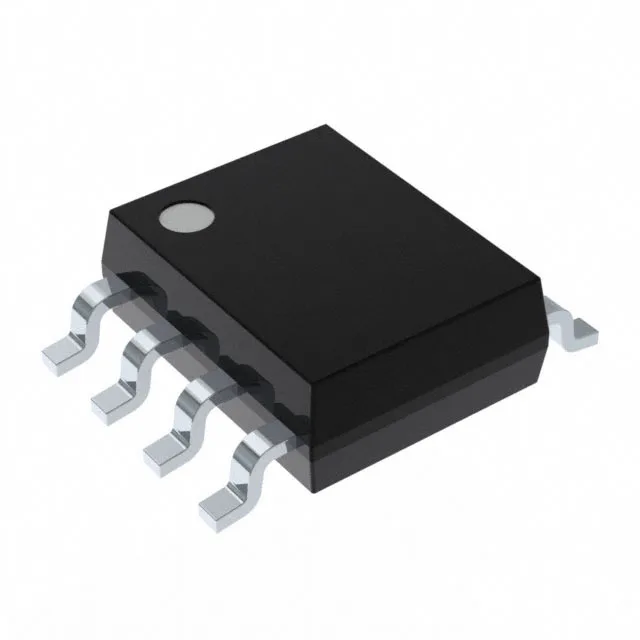
Analog Devices MAX407CSA+ — Discrete Semiconductors

MAX407CSA+ Analog Devices Op-Amp, 8 kHz GBW, Rail-to-Rail

MPNMAX407CSA+
End of Life

Analog Devices MAX407CSA+ dual general-purpose op-amp, 8 kHz gain bandwidth, 0.005 V/µs slew rate, rail-to-rail output, 8-SOIC package, tube.

$11.18Ref. price · indicative, final on quote
Packaging8-SOIC (0.154", 3.90mm Width)
RoHSROHS3 Compliant
Sourced new & surplus through independent channelsAuthenticity-screened · ESD-safe packingListing updated Aug 2026

Specifications

MAX407CSA+ specifications
ParameterValue
Output typeRail-to-Rail
MountingSurface Mount
Amplifier typeGeneral Purpose
Voltage - input offset1 mV
Voltage - supply span2.5 V
Current - supply1µA (x2 Channels)
Current - input bias0.1 pA
Current - output (Channel)600 µA
Operating temperature0°C ~ 70°C
Gain bandwidth product8 kHz
PackageTube
Slew rate0.005V/µs
Case8-SOIC (0.154\", 3.90mm Width)
Number of circuits2

Product details

Dual op-amp for low-frequency, low-power signal chains

The MAX407CSA+ is a dual general-purpose operational amplifier from Analog Devices, designed for applications where power consumption and board space are primary constraints. Each of the two channels draws just 1 µA of supply current, making this part suitable for battery-powered or energy-harvesting sensor interfaces that must run continuously for months on a coin cell.

Input characteristics and signal integrity

Input bias current is specified at 0.1 pA, which is negligible even for high-impedance sources such as pH probes, photodiode transimpedance stages, or piezoelectric sensors. The typical input offset voltage of 1 mV is moderate but acceptable for general-purpose conditioning of signals above a few millivolts. Each output can source or sink 600 µA, enough to drive the input of an ADC, a comparator, or a low-power microcontroller pin directly.

Frequently asked questions

What is the gain bandwidth product and slew rate of MAX407CSA+?

The gain-bandwidth product is 8 kHz, and the slew rate is 0.005 V/µs. These figures define the usable frequency range — the part is suited for DC and low-frequency signals, not for audio or video bandwidths.