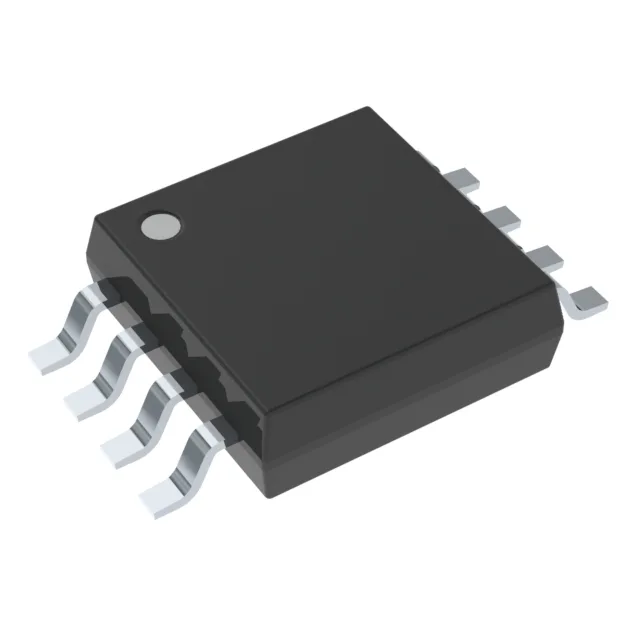
Analog Devices MAX4070AUA+ — Analog & Data Acquisition

MAX4070AUA+ Current Sense Amplifier, 100 kHz, 8-uMAX/uSOP

MPNMAX4070AUA+
End of Life

Analog Devices MAX4070AUA+ current sense amplifier, single circuit, 100 kHz bandwidth, 3.6 V to 24 V supply, 8-uMAX/uSOP surface-mount package, -40°C to 125°C operating temperature.

$4.23Ref. price · indicative, final on quote
Packaging8-TSSOP, 8-MSOP (0.118", 3.00mm Width)
RoHSROHS3 Compliant
Sourced new & surplus through independent channelsAuthenticity-screened · ESD-safe packingListing updated Aug 2026

Specifications

MAX4070AUA+ specifications
ParameterValue
MountingSurface Mount
Amplifier typeCurrent Sense
Voltage - input offset80 µV
Voltage - supply span3.6 V
Current - supply100µA
Current - input bias2.4 µA
Operating temperature-40°C ~ 125°C
-3db bandwidth100 kHz
PackageTube
Case8-TSSOP, 8-MSOP (0.118\", 3.00mm Width)
Number of circuits1

Product details

What this current-sense amplifier does

The MAX4070AUA+ is a single-channel current-sense amplifier from Analog Devices, designed to measure current by sensing the voltage drop across a shunt resistor. It delivers a ground-referenced output proportional to the sensed current, simplifying interface to an ADC or comparator. The part operates from a 3.6 V to 24 V supply span, covering common industrial and automotive rails, and draws only 100 µA supply current — useful for always-on monitoring without loading the rail. With a 100 kHz bandwidth, it tracks switching regulator currents and load transients cleanly.

Housed in an 8-pin 3.00 mm × 3.00 mm uMAX/uSOP package (MSOP-8 compatible), the MAX4070AUA+ is a surface-mount device.

Frequently asked questions

What is the bandwidth of MAX4070AUA+?

The -3 dB bandwidth is 100 kHz, suitable for monitoring DC currents and low-frequency load transients but not for reproducing switching waveforms above that frequency.

Can MAX4070AUA+ be used for high-side current sensing?

Yes, as a current-sense amplifier it is designed for both high-side and low-side current sensing. The wide input common-mode range (implied by the supply span) allows it to measure current on the positive rail.