What this transimpedance amplifier does
Its 520 MHz gain-bandwidth product supports high-speed optical receivers, LIDAR front-ends, and fiber-optic links where bandwidth and low noise are critical. The differential output drives ADCs or subsequent stages with common-mode rejection, reducing susceptibility to ground bounce and coupled noise on the board.
A 520 MHz gain-bandwidth product sets the usable transimpedance gain before the closed-loop bandwidth rolls off. For a typical photodiode capacitance of 1 pF, this part maintains a flat gain up to several hundred MHz, which is the difference between a clean eye diagram and a closed one in 1 Gbps optical links. The single 3.3 V supply simplifies rail design in systems that already run 3.3 V logic and FPGAs.
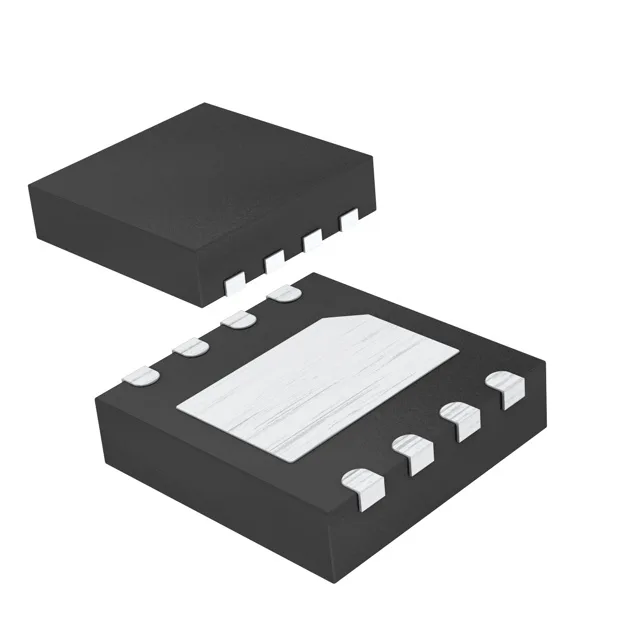
The 8-TDFN (3x3) footprint keeps the signal path short — critical for preserving bandwidth and minimizing parasitic inductance from the photodiode to the input. Surface-mount assembly is standard for reflow processes.
The 21 mA supply current is typical for a wideband TIA — budget for it in the power tree alongside the photodiode bias and ADC supply.
Maxim lists the MAX40658ETA+T as Active and ROHS3 compliant.