The MAX3443ECSA+ is a half-duplex transceiver supporting RS422 and RS485 protocols. It handles one driver and one receiver, with a data rate of 10 Mbps. Receiver hysteresis is 25 mV. Operating temperature is 0°C to 70°C.
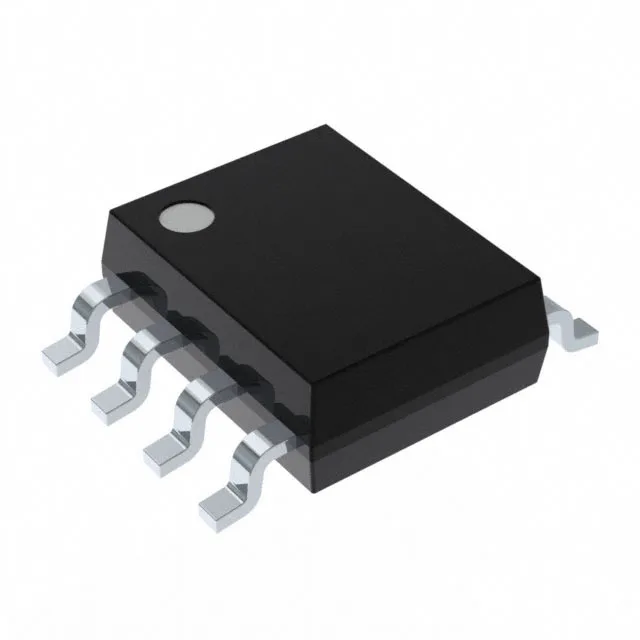
MAX3443ECSA+ RS-485/RS-422 Transceiver, Half-Duplex, 10 Mbps
MPNMAX3443ECSA+
End of Life
Maxim Integrated MAX3443ECSA+, RS-485/RS-422 Transceiver, Half-Duplex, 1/1 Drivers/Receivers, 10 Mbps, 4.75V-5.25V, 0°C-70°C, 8-SOIC
$7.43Ref. price · indicative, final on quote
Packaging8-SOIC (0.154", 3.90mm Width)
RoHSROHS3 Compliant
Independent supplier — new & surplus stockAuthenticity-screened · ESD-safe packingListing updated Aug 2026
Specifications
| Parameter | Value |
|---|---|
| Type | Transceiver |
| Mounting | Surface Mount |
| Supply voltage | 4.75V ~ 5.25V |
| Protocol | RS422, RS485 |
| Operating temperature | 0°C ~ 70°C |
| Duplex | Half |
| Package | Tube |
| Data rate | 10Mbps |
| Case | 8-SOIC (0.154\", 3.90mm Width) |
| Receiver hysteresis | 25 mV |
| Number of drivers (Receivers) | 1/1 |
Product details
Frequently asked questions
Can MAX3443ECSA+ operate at 3.3 V?
No — the supply range is 4.75 V to 5.25 V. This transceiver requires a 5 V rail; it is not specified for 3.3 V operation.
What is the difference between MAX3443ECSA+ and MAX3443EESA+?
The two parts are functionally identical — same transceiver, same 10 Mbps data rate, same 8-SOIC package. The difference is temperature grade: the MAX3443ECSA+ is rated 0°C to 70°C (commercial), while the MAX3443EESA+ is rated -40°C to +85°C (industrial). For outdoor, unheated, or automotive-adjacent environments, use the EESA+ variant.
Is MAX3443ECSA+ equivalent to SN65HVD10?
Both are 5 V half-duplex RS-485 transceivers in 8-SOIC, but they are not drop-in equivalents without a pinout check. The SN65HVD10 from TI is a functional peer with similar data rate and supply range. Confirm the enable-logic polarity and receiver-disable behaviour against your schematic before substituting; the Maxim part uses a different enable scheme on the driver and receiver pins.