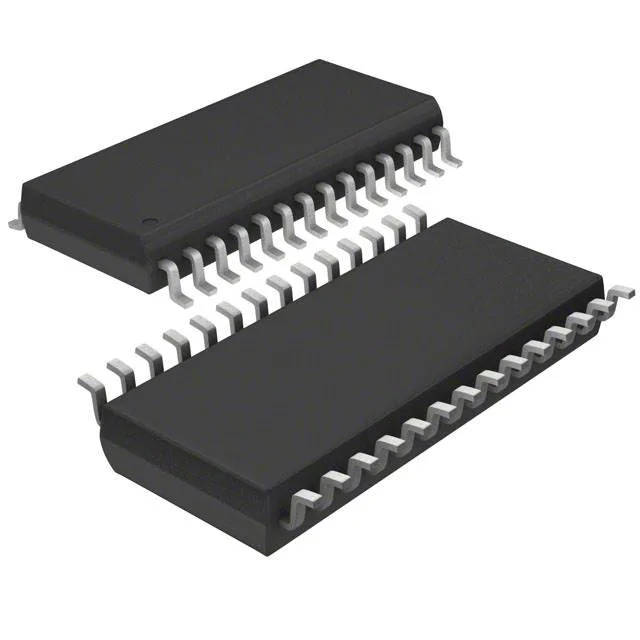
16:1 analog multiplexer — what the key specs mean for your signal path
The MAX306EUI+ is a single 16:1 analog multiplexer from Maxim Integrated, designed to route one of sixteen analog inputs to a common output. The 100 Ohm on-state resistance (max) sets the series insertion loss — for a 10 kOhm load, that is about 1% attenuation, negligible in most precision analog chains. The channel-to-channel matching of 1.5 Ohm keeps gain error consistent across channels, which matters when scanning multiple sensor inputs through the same conditioning stage. The -92 dB crosstalk at 100 kHz means adjacent channels couple less than 0.0025% of their signal — important when switching low-level transducer signals alongside a higher-voltage reference. Charge injection is 2 pC typical, which translates to a voltage glitch of about 2 mV into a 1 nF hold capacitor — acceptable for 12-bit settling in sample-and-hold front ends. Off-leakage is 500 pA max, so the mux will not droop a held voltage significantly over the microsecond-to-millisecond hold times typical in multiplexed ADC systems.
Single-supply operation from 5 V to 30 V, or dual supplies from ±4.5 V to ±20 V. The wide range lets the mux sit on a ±15 V analog rail for industrial signal conditioning or on a single 5 V rail in a battery-powered instrument.
Housed in a 28-TSSOP (0.173" body width, 4.40 mm), the surface-mount package is a common footprint shared with many Maxim 16:1 mux variants. The supplier device package is 28-TSSOP; the shipping form is Tube. No special thermal management is needed — the 100 Ohm Ron and low leakage keep self-heating minimal.