The Maxim Integrated MAX20458ATIA/VY+ is an automotive-grade, AEC-Q100 qualified, 36V dual-output synchronous buck (step-down) DC-DC converter delivering 3.5A on one channel and 1.5A on the other. It switches at 2.1MHz, which lets the designer use physically smaller inductors and ceramic capacitors — a real advantage when board space in an automotive ECU is measured in square millimetres. The wide 3.5V to 36V input range covers the 12V and 24V automotive battery rails and survives load-dump events without an extra front-end regulator. The output is positive, configured as a transistor driver, and synchronous rectification is included on-chip to hit higher efficiency at the output currents this part is sized for.
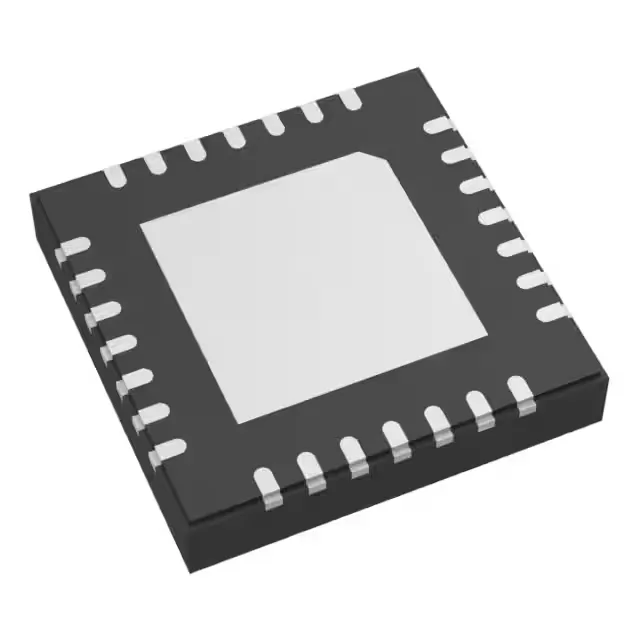
Housed in a 28-WFQFN exposed-pad package (supplier device package 28-TQFN, 5x5 mm), this is a surface-mount part with wettable flanks. The wettable flank feature is a practical one for automotive production: it allows automated optical inspection (AOI) of the solder joints on the side of the package, which a standard QFN with hidden terminations does not.
The 2.1MHz switching frequency is at the higher end for automotive DC-DC converters. At this speed the inductor value drops into the 1 µH to 2.2 µH range, and the output capacitors can be 10 µF or 22 µF ceramics rather than bulkier electrolytics. The trade-off is that switching losses in the FETs and core losses in the inductor rise with frequency, so the efficiency peak shifts to lighter loads — the design engineer should check the expected load current against the efficiency curves in the datasheet. The part includes clock sync (Yes), which lets the designer synchronise the switching edge to an external clock, avoiding beat-frequency noise when multiple converters share a rail.
It is ROHS3 compliant and qualified to AEC-Q100, which means it meets the stress and reliability tests the automotive tier demands. No NRND or last-time-buy notice is on file.