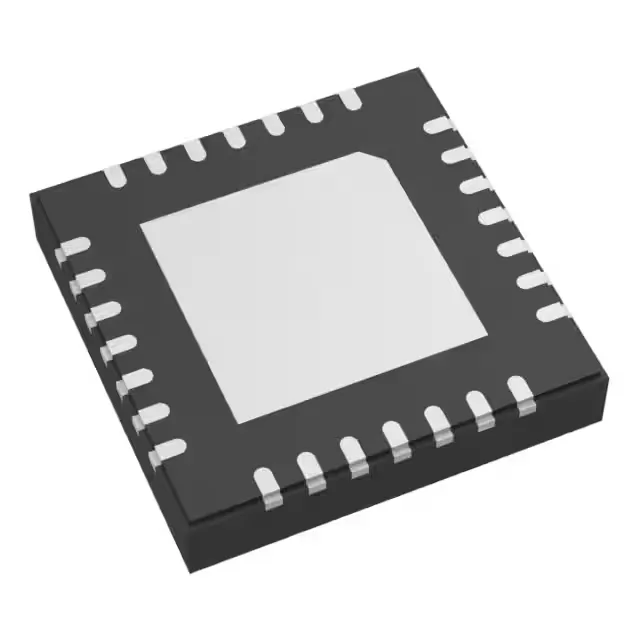
Analog Devices MAX20094ATID/VY+ — Power Management (PMIC / Gate Driver)

MAX20094ATID/VY+ Battery Charger IC, AEC-Q100, 1A Li-Ion

MPNMAX20094ATID/VY+
End of Life

Maxim Integrated MAX20094ATID/VY+, Automotive AEC-Q100, single-cell Li-Ion battery charger IC, I²C/SMBus interface, 36V supply max, 1A charge current, 28-TQFN (5x5) exposed pad.

$9.28Ref. price · indicative, final on quote
Packaging28-WFQFN Exposed Pad
RoHSROHS3 Compliant
SeriesAutomotive, AEC-Q100
Sourced new & surplus through independent channelsAuthenticity-screened · ESD-safe packingListing updated Aug 2026

Specifications

MAX20094ATID/VY+ specifications
ParameterValue
SeriesAutomotive, AEC-Q100
MountingSurface Mount, Wettable Flank
Battery pack voltage7.1V
Voltage36V
Current - chargingConstant
Charge current - max1A
InterfaceI²C, SMBus
Operating temperature-40°C ~ 125°C (TA)
PackageTube
Case28-WFQFN Exposed Pad
Number of cells1
Battery chemistryLithium Ion

Product details

It handles a single Li-Ion cell with a constant-current charging profile, delivering up to 1A charge current. The part communicates over I²C and SMBus for charge parameter configuration and status monitoring. Supply input accepts up to 36V, covering 12V and 24V vehicle electrical systems without external pre-regulation. The 28-TQFN (5x5) exposed-pad package with wettable flanks supports automated optical inspection in production.

Automotive temperature range and package

Wettable-flank terminals improve side-wetting inspection, a requirement in many automotive assembly lines.

It is ROHS3 compliant. No LTB window or successor has been issued.

Frequently asked questions

What is the exact function of MAX20094ATID/VY+?

It is a single-cell Lithium Ion battery charger IC with I²C/SMBus interface, delivering up to 1A constant charge current from a supply up to 36V, qualified to AEC-Q100 for automotive use.

What is the difference between MAX20094ATID/VY+ and MAX20094ATID/VY+T?

The suffix 'T' typically indicates tape-and-reel packaging. The 'VY+' variant ships in Tube. Both share the same electrical specifications and automotive qualification.