Buck-boost regulator for automotive power rails
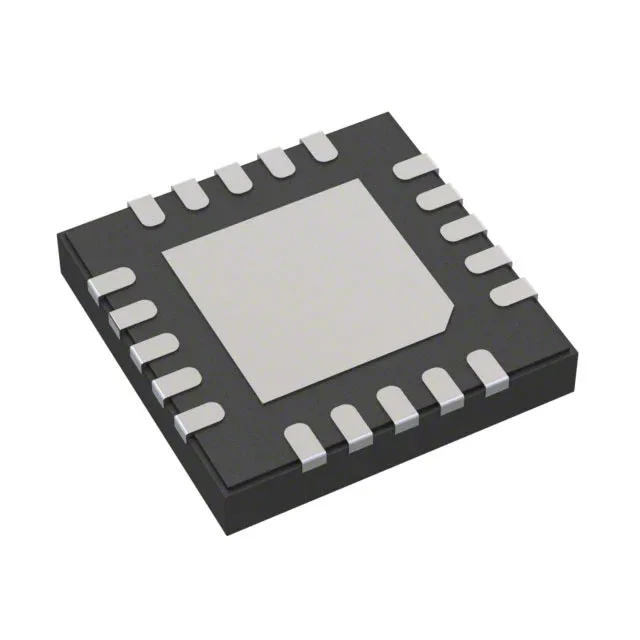
It accepts a 2 V to 36 V input range and delivers a programmable output up to 15 V at 1.2 A, switching at 2.2 MHz. The buck-boost topology keeps the output regulated whether the input sits below, at, or above the output voltage — a requirement for automotive battery rails that swing during cold-crank, start-stop, and load-dump transients. The package includes an exposed pad for thermal dissipation and wettable flanks on the QFN pads, which lets automated optical inspection (AOI) verify solder-joint quality on the production line.
2.2 MHz switching — small inductor, tight layout
At 2.2 MHz, the switching frequency pushes the inductor and output capacitor values down, shrinking the total power-stage footprint for space-constrained ECU layouts. The synchronous rectifier (integrated) improves efficiency and removes the external Schottky diode, saving one component and one placement step.
Output programming — resistor divider sets the voltage
The output voltage is programmable via an external resistor divider, with a range up to 15 V. The fixed-programmable designation means the internal reference is fixed, but the feedback pin accepts the divider ratio to set the output.
It is not in a last-time-buy or phase-out window. For production programs that need a qualified second source, no pin-compatible alternate is listed on the official cross-reference — the part is sole-sourced to Maxim's automotive line.