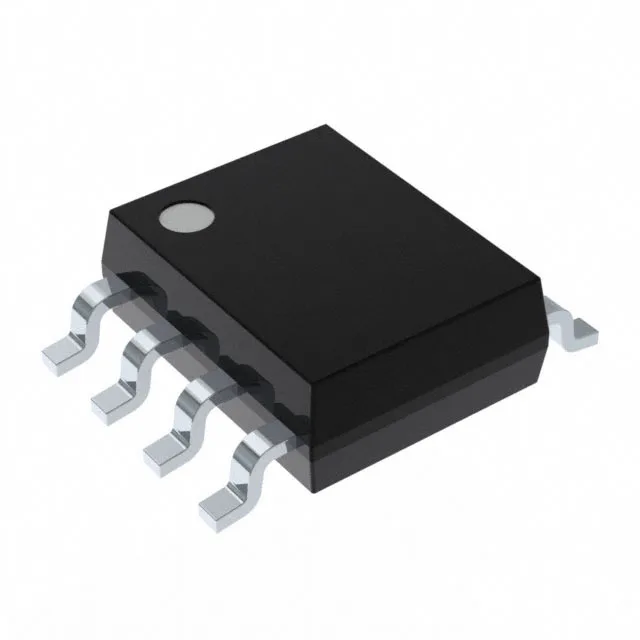
Analog Devices MAX1966ESA+ — DC-DC Power Modules

MAX1966ESA+ Buck Controller, 102kHz, 8-SOIC

MPNMAX1966ESA+
End of Life

Analog Devices MAX1966ESA+, Step-Down Buck Controller, 1 Output, Transistor Driver, 102kHz Switching, 2.7V–5.5V Supply, 8-SOIC (0.154", 3.90mm Width), -40°C to 85°C, Tube.

$4.58Ref. price · indicative, final on quote
Packaging8-SOIC (0.154", 3.90mm Width)
RoHSROHS3 Compliant
Independent supplier — new & surplus stockAuthenticity-screened · ESD-safe packingListing updated Aug 2026

Specifications

MAX1966ESA+ specifications
ParameterValue
Output typeTransistor Driver
MountingSurface Mount
Voltage - supply (Vcc (Vdd))2.7V ~ 5.5V
Frequency - switching102kHz
I/O channels1
Output phases1
Duty cycle95%
Operating temperature-40°C ~ 85°C (TA)
PackageTube
FunctionStep-Down
TopologyBuck
Clock syncNo
Case8-SOIC (0.154\", 3.90mm Width)
Control featuresEnable
Output configurationPositive
Synchronous rectifierYes

Product details

The switching frequency is fixed at 102 kHz, with no clock sync input.

Synchronous rectifier — external MOSFETs required

This is a controller, not a converter; there are no integrated power switches. The Transistor Driver output type means you supply two N-channel MOSFETs — one for the high side, one for the low side — plus the inductor and output capacitor. The synchronous rectifier topology demands a bootstrap capacitor for the high-side gate drive. The 95% maximum duty cycle leaves headroom for dropout operation near the input rail. The Enable control feature lets you sequence the rail on and off from a logic signal.

Package and environment

No pin-compatible second source or official replacement is listed in the available documentation.

Frequently asked questions

Does the MAX1966ESA+ require external MOSFETs?

Yes. This is a controller, not a converter — it drives two external N-channel MOSFETs (high-side and low-side) in a synchronous rectifier topology. No internal power switches.

What is the closest pin-compatible alternative to the MAX1966ESA+?

No official pin-compatible second source or replacement is listed in the available documentation.