Signal isolation for mixed-voltage boards
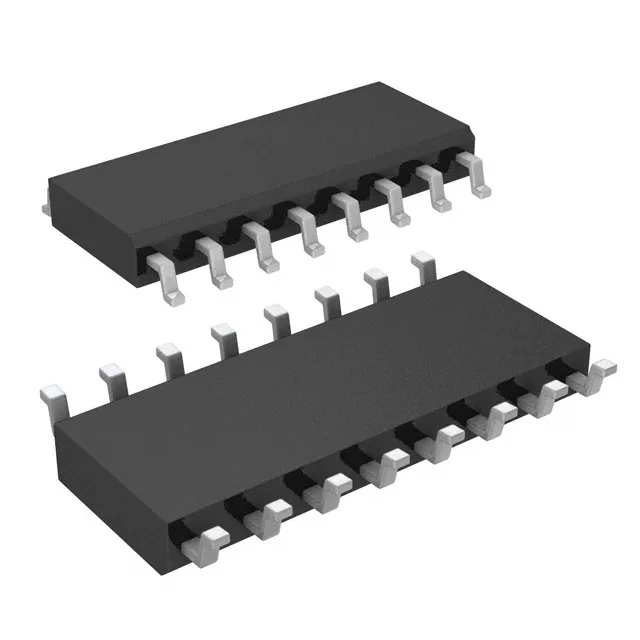
The MAX14930FASE+ is a 4-channel general-purpose digital isolator from Analog Devices that uses capacitive coupling to break ground loops and protect low-voltage logic from high-voltage domains on the same PCB. It is rated for 150 Mbps data rate with 7.5 ns max propagation delay and 2 ns rise/fall times, so it handles SPI, UART, and CAN interfaces without adding timing margin problems. The 2750 Vrms isolation voltage provides basic insulation for industrial sensor interfaces, motor-drive control signals, and medical equipment where the isolated side must be separated from the human-accessible circuitry.
Supply flexibility and level translation
The 4 unidirectional channels all run from side 1 to side 2, meaning this variant is for data-forwarding isolation only — no reverse-direction channel is available on this order code. The 25 kV/µs typical common-mode transient immunity means the output stays valid when a fast voltage transient slams across the isolation barrier — a requirement in inverter-driven motor controls where the switching node rings at several kV/µs.
The 1 ns max pulse-width distortion ensures that the duty cycle of the transmitted signal is preserved within tight limits — important for protocols like RS-485 or CAN where the bit timing depends on edge symmetry.