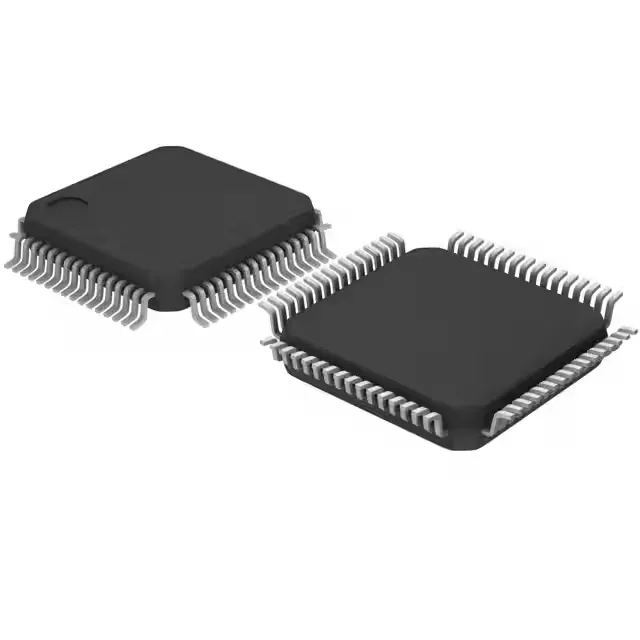
What a 6-phase bidirectional controller means for your power stage
The LTC7871HLWE#PBF is a 6-phase bidirectional buck/boost controller from the PolyPhase series, built to handle high-current, multi-kW power conversion where the load can both source and sink energy — think battery charge/discharge, supercapacitor backup, or regenerative motor drives. The six interleaved phases spread the inductor current across six channels, cutting input and output ripple without pushing the switching frequency into the MHz range; you get lower capacitor stress and a smaller magnetics footprint than a single-phase design at the same total current. The part operates from a 6V to 100V supply rail, making it viable for 48V telecom, 72V automotive, or 96V industrial battery stacks without an external pre-regulator. The switching frequency is programmable from 60kHz to 750kHz and can be synchronized to an external clock, so you can place the switching harmonics in a quiet band or align multiple converters to a common timing reference.
Six outputs, SPI control, and a 150°C junction limit
Six independent transistor-driver outputs — one per phase — let you drive external N-channel MOSFETs in a buck-boost topology. The controller supports synchronous rectification, which recovers the body-diode conduction loss and pushes efficiency into the mid-90s at full load, but it also means the gate-drive layout needs care: the six high-side and six low-side gate traces must be matched in impedance and length to keep phase currents balanced. An SPI serial interface provides digital configuration and telemetry — you can read back fault flags, output voltage setpoint, and phase-current balance without adding an external ADC. The control features include Enable, Power Good, and Soft Start; the soft-start ramp prevents inrush current from tripping the upstream supply on power-up, which is critical when the output capacitor bank totals several millifarads.