Wide-input buck-boost controller for multi-rail designs
The LTC3871ILXE#PBF is a dual-output synchronous controller that handles step-up and step-down conversion from a single supply rail spanning 1.2V to 100V (Vcc/Vdd). It drives external N-channel MOSFETs in a buck-boost topology, with the switching frequency programmable between 60kHz and 460kHz via an external resistor. Two independent outputs with programmable phase shifting let you interleave the channels for reduced input ripple and smaller input capacitors — a common requirement when deriving multiple rails from a single battery or bus.
Parametric fit: supply range and thermal envelope
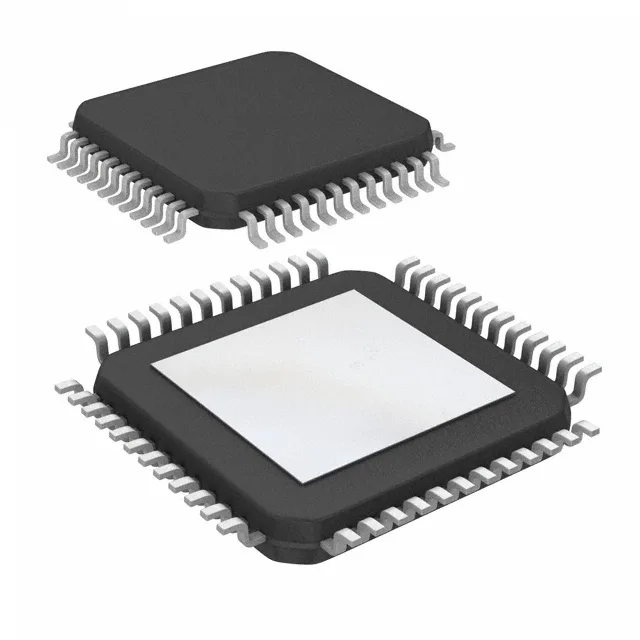
The 1.2V to 100V input range covers automotive 12V/24V systems, industrial 48V backplanes, and battery stacks where the voltage swings widely under charge and discharge. Operating temperature from -40°C to 125°C (TA) matches the industrial and automotive under-hood grade — the controller itself is rated for the full ambient range without derating. The 48-LQFP exposed pad package (7x7mm body) requires a thermal land on the PCB to pull heat from the die; the exposed pad is the primary thermal path, so the board layout must include vias to a copper plane.
Control and protection features for robust designs
Built-in control features include current limit, enable, frequency control, phase control, and soft start — enough to sequence two rails without an external supervisor. Synchronous rectification is enabled on both channels, which improves efficiency at high step-down ratios compared to a diode-based freewheel. Maximum duty cycle of 98% means the controller can run near-full on-time in step-down mode, useful when the input voltage is only marginally above the output target.