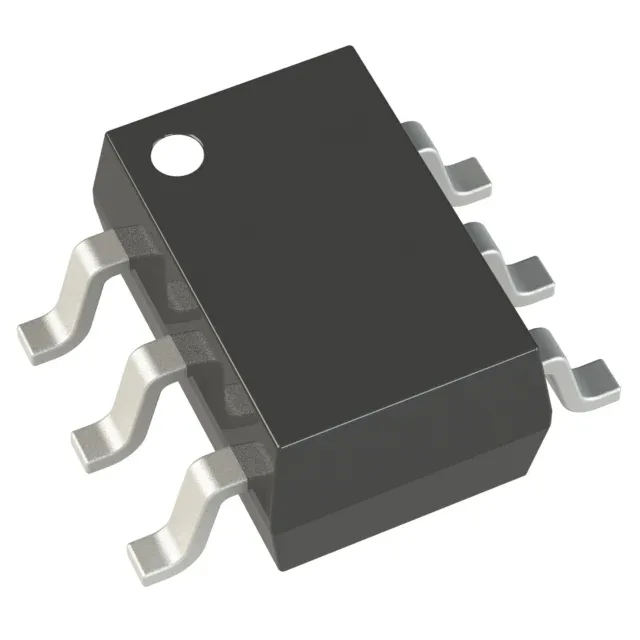
What does the 175 mA output mean for your load budget?
The LTC3525ISC6-5#TRMPBF is a fixed 5 V output boost converter delivering up to 175 mA. That current rating is the continuous output at the regulated 5 V rail — not a peak or transient figure. For a sensor node drawing 120 mA continuous with the remaining margin for startup inrush, this part sits comfortably within the envelope.
Input range and startup conditions
It accepts an input from 1 V minimum to 4.5 V maximum. That 1 V floor means it can start from a nearly depleted single-cell Li-ion or two alkaline cells in series.
Synchronous rectifier and efficiency
This pulls the efficiency curve up at moderate loads and reduces the BOM count — the inductor and input/output capacitors are the only external passives needed.
Housed in the 6-lead SC-70-6 (also designated 6-TSSOP / SOT-363), the package footprint is 2.0 mm × 2.1 mm with a 0.65 mm pitch. The small size keeps the routing short between the inductor and the switch node, which matters for switching noise control.
Note that the 125°C limit is junction — the actual ambient ceiling depends on the board thermal resistance and the load current.