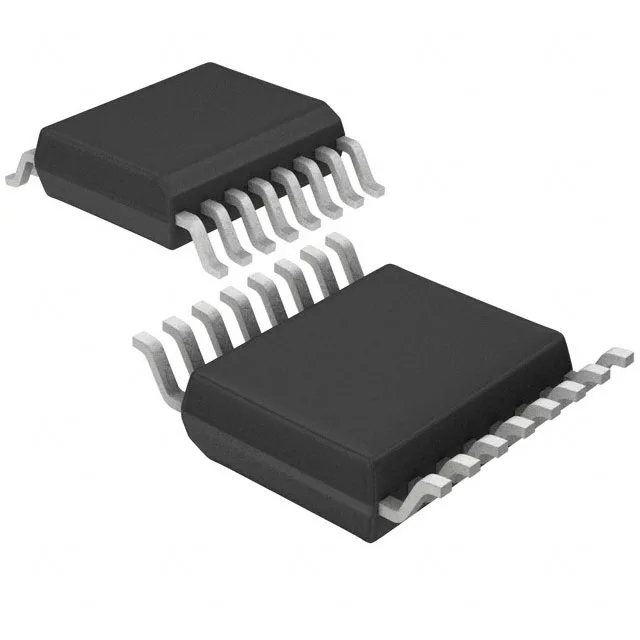
Analog Devices LTC1879EGN#PBF — Analog & Data Acquisition

LTC1879EGN#PBF Buck Regulator, 1.2 A, 550 kHz, 16-SSOP

MPNLTC1879EGN#PBF
End of Life

Analog Devices LTC1879EGN#PBF, Buck Step-Down Regulator, Adjustable Output, 1.2 A, 550 kHz, Synchronous Rectifier, 16-SSOP Package, -40°C to 85°C.

$10.36Ref. price · indicative, final on quote
Packaging16-SSOP (0.154", 3.90mm Width)
RoHSROHS3 Compliant
Independent supplier — new & surplus stockAuthenticity-screened · ESD-safe packingListing updated Aug 2026

Specifications

LTC1879EGN#PBF specifications
ParameterValue
Output typeAdjustable
MountingSurface Mount
Voltage - input2.65V
Voltage - output10V
Voltage - output (Min (Fixed))0.8V
Output current1.2A
Frequency - switching550kHz
I/O channels1
Operating temperature-40°C ~ 85°C (TA)
PackageTube
FunctionStep-Down
TopologyBuck
Case16-SSOP (0.154\", 3.90mm Width)
Output configurationPositive
Synchronous rectifierYes

Product details

Step-down regulator with synchronous rectification

The LTC1879EGN#PBF is a current-mode step-down (buck) switching regulator delivering a positive adjustable output from 0.8 V up to the input voltage. It integrates a synchronous rectifier, so no external Schottky catch diode is needed. The fixed 550 kHz switching frequency sets the inductor value and EMI profile. Output current is rated at 1.2 A continuous, and the input range spans 2.65 V to 10 V.

Housed in a 16-lead SSOP (0.154" body width, 3.90 mm), this is a surface-mount part intended for reflow assembly.

Frequently asked questions

What is the difference between LTC1879EGN#PBF and LTC1879EGN#TRPBF?

The two order codes share identical silicon and package. The difference is the shipping medium: LTC1879EGN#PBF ships in a tube, while the TRPBF suffix indicates tape-and-reel packaging. For high-volume pick-and-place, the TR version is the usual choice; for prototype or low-volume builds, the tube version is fine.

Does LTC1879EGN#PBF require an external Schottky diode?

No. The LTC1879EGN#PBF integrates a synchronous rectifier, so it does not need an external catch diode. This reduces BOM count and improves efficiency, especially at lower output voltages.