Four-rail hot swap for CompactPCI backplanes
The LTC1643ALCGN#PBF is a 4-channel Hot Swap Controller from Analog Devices, purpose-built for CompactPCI card insertion into a live backplane. It manages the inrush on the 3.3V, 5V, and ±12V rails simultaneously, with the internal pass FETs handling both the turn-on slew rate and fault isolation on each channel. Each of the four channels is independently programmable for current limit, fault timeout, and output slew rate via external passives, so you can tune the ramp-up to match the bulk capacitance on each rail without tripping the upstream supply.
Per-rail current rating and what it means at the bench
The output current rating is split: 200 mA on the 3.3V and 5V channels, and 500 mA on the ±12V channels. That 500 mA on the ±12V rails is the one that catches people — a CompactPCI card drawing 300 mA on +12V is fine, but if the downstream regulator on the card has a high inrush cap, the fault-timeout programming needs to account for the longer ramp. The latched-fault behaviour means once a channel hits the current limit and times out, it stays off until the UVLO reset or the power is cycled — no auto-retry. That is deliberate for backplane safety: a shorted card does not keep hammering the bus. If the backplane lives in an outdoor cabinet or an unventilated enclosure, the industrial-temperature sibling LTC4244IGN#PBF (-40°C to 85°C) is the one to reach for.
Package, footprint, and the scorch-mark test
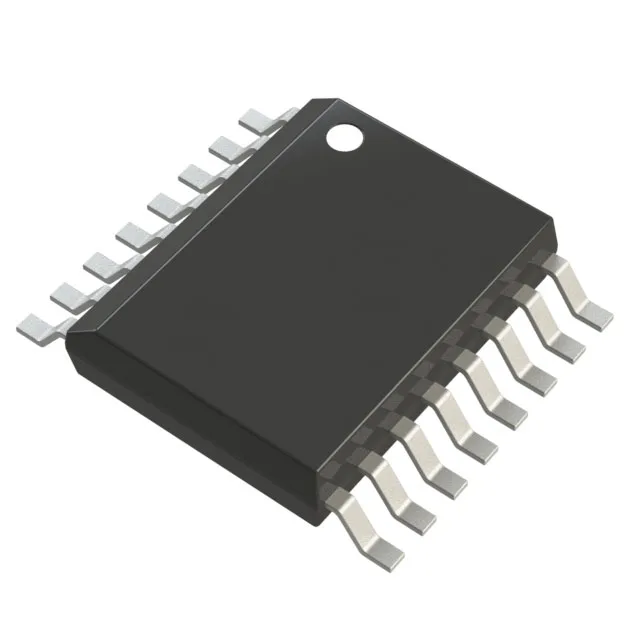
The 16-SSOP (0.154" body width, 3.90 mm) is a standard fine-pitch SOIC variant. The 0.025" lead pitch means a standard SSOP-16 land pattern works; no exotic pad geometry. The supplier device package is the same 16-SSOP, so no confusion between body widths. Surface-mount only — no through-hole option. If you are reworking a CompactPCI card that has a blown hot-swap controller, the scorch mark on the board usually points to the FET side, not the controller itself. But when the controller does fail, the latched-fault behaviour means the card will not power up at all, which is a clean failure signature to diagnose.
ROHS3 compliant, so it passes the current EU material restrictions without an exemption. No AEC-Q automotive qualification; this is a commercial/industrial part.