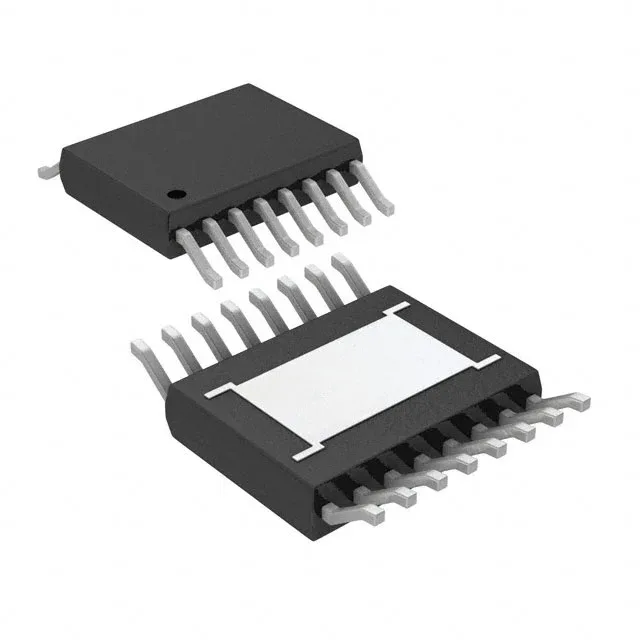
Analog Devices LT8610AEMSE#PBF — Discrete Semiconductors

LT8610AEMSE#PBF Analog Devices Buck Regulator, 3.5A

MPNLT8610AEMSE#PBF
End of Life

Analog Devices LT8610AEMSE#PBF, step-down buck regulator, adjustable output, 3.5A, 42V input, synchronous rectifier, 16-MSOP-EP exposed pad, tube.

$11.3Ref. price · indicative, final on quote
Packaging16-TFSOP (0.118", 3.00mm Width) Exposed Pad
RoHSROHS3 Compliant
Sourced new & surplus through independent channelsAuthenticity-screened · ESD-safe packingListing updated Aug 2026

Specifications

LT8610AEMSE#PBF specifications
ParameterValue
Output typeAdjustable
MountingSurface Mount
Voltage - input3.4V
Voltage - output42V
Voltage - output (Min (Fixed))0.97V
Output current3.5A
Frequency200kHz ~ 2.2MHz
I/O channels1
Operating temperature-40°C ~ 125°C (TJ)
PackageTube
FunctionStep-Down
TopologyBuck
Case16-TFSOP (0.118\", 3.00mm Width) Exposed Pad
Output configurationPositive
Synchronous rectifierYes

Product details

3.5A step-down with synchronous rectification

The LT8610AEMSE#PBF is a monolithic step-down buck regulator from Analog Devices, delivering up to 3.5 A continuous output from a 3.4 V to 42 V input rail. The internal synchronous rectifier eliminates the external catch diode, keeping the BOM count low on a single-layer power stage. The 200 kHz to 2.2 MHz switching frequency range lets you trade inductor size against efficiency — run at 2.2 MHz to shrink the magnetics into a 0805 footprint, or drop to 200 kHz for best light-load efficiency.

Industrial temperature grade and supply range

The 42 V input maximum handles 24 V industrial rails with margin for transients up to 40 V, and the 3.4 V minimum lets it start from a 3.6 V lithium cell near end-of-discharge.

ROHS3 compliant, so it passes into EU and California markets without exemption paperwork.

Frequently asked questions

What is the LT8610AEMSE#PBF used for?

It is a step-down (buck) switching regulator that converts a higher DC voltage — 3.4 V to 42 V — down to a lower adjustable output, delivering up to 3.5 A. Typical applications include point-of-load regulation in industrial controls, telecom equipment, and battery-powered systems where efficiency matters.