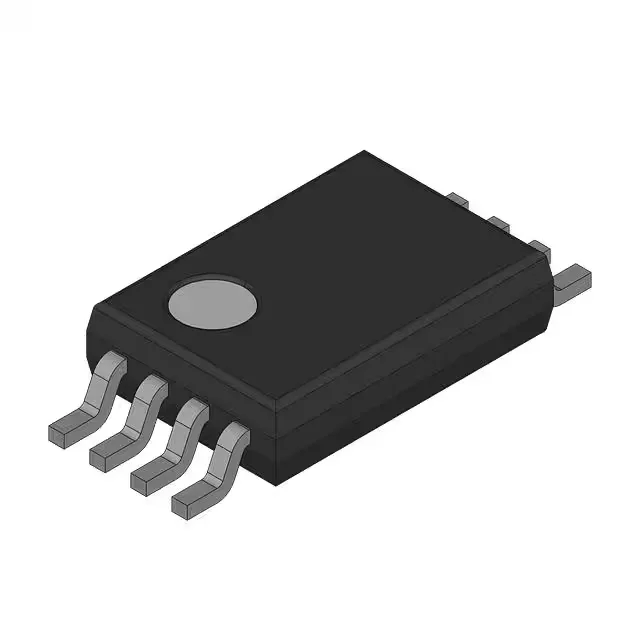
Analog Devices LT1965EMS8E-1.5 — Power Management (PMIC / Gate Driver)

LT1965EMS8E-1.5 LDO Regulator, 1.1A, 1.5V Fixed, 75dB PSRR

MPNLT1965EMS8E-1.5
End of Life

Analog Devices LT1965EMS8E-1.5 LDO voltage regulator, 1.1A output, 1.5V fixed output, 75dB PSRR at 120Hz, 0.49V dropout at 1.1A, 8-MSOP-EP package, active.

$6.29Ref. price · indicative, final on quote
Packaging8-TSSOP, 8-MSOP (0.118", 3.00mm Width) Exposed Pad
Sourced new & surplus through independent channelsAuthenticity-screened · ESD-safe packingListing updated Aug 2026

Specifications

LT1965EMS8E-1.5 specifications
ParameterValue
Output typeFixed
MountingSurface Mount
Voltage - input20V
Voltage dropout0.49V @ 1.1A
Voltage - output (Min (Fixed))1.5V
Output current1.1A
Current - supply40 mA
Current - quiescent1.1 mA
Operating temperature-40°C ~ 125°C (TJ)
PSRR75dB (120Hz)
PackageBulk
Case8-TSSOP, 8-MSOP (0.118\", 3.00mm Width) Exposed Pad
Control featuresEnable
Protection featuresOver Current, Over Temperature, Reverse Polarity
Number of regulators1
Output configurationPositive

Product details

1.1A fixed 1.5V rail with 75dB PSRR — what the noise rejection means for sensitive loads

The LT1965EMS8E-1.5 is a 1.1A low-dropout linear regulator from Analog Devices, delivering a fixed 1.5V output from an input up to 20V. The 75dB PSRR at 120Hz means ripple on the input rail — from a switching preregulator or rectified line — is attenuated by a factor of about 5600 before reaching the output. For a 3.3V input swinging 100 mVpp at 120 Hz, the output sees roughly 18 µVpp of that ripple, clean enough for an ADC reference or a precision analog front-end. Dropout is 0.49V max at the full 1.1A load. That sets the minimum input-to-output headroom: to hold 1.5V regulated at 1.1A, the input must stay above 1.99V. Below that the output tracks the input minus the pass element's drop — the regulator falls out of regulation. On a 3.3V rail that is 1.31V of margin; on a 1.8V rail it is only 0.01V above the dropout ceiling, so the 1.8V rail is not a viable source at full load.

Package and thermal path — the exposed pad is the heat sink

The 8-MSOP-EP (exposed pad) package, supplier device package 8-MSOP-EP, routes the die's heat through the pad to the PCB copper. Without that copper spread, the junction temperature at 1.1A and 2V dropout (2.2W dissipation) would exceed the 125°C absolute maximum junction temperature in still air. That covers industrial enclosures, engine-bay electronics, and outdoor telecom gear. The protection features — over-current, over-temperature, and reverse polarity — mean the regulator survives a miswired input or a shorted output without latching or failing open.

Active lifecycle — still a current production part

That means the part is still in the manufacturer's active portfolio, and new designs can commit to it without a near-term obsolescence risk. The part is not a spot-market surplus item; it is a current-production order code that traces back through the authorized channel.

Frequently asked questions

What is the PSRR of LT1965EMS8E-1.5 and why does it matter?

The PSRR is 75dB at 120Hz. That means ripple on the input rail at line frequency is attenuated by a factor of about 5600 before reaching the output — critical for supplying clean power to analog circuits like ADCs, op-amps, or VCOs that are sensitive to supply noise.

Will LT1965EMS8E-1.5 drop into a board designed for LT1965EMS8E-3.3#PBF?

No — the output voltage is different. The LT1965EMS8E-1.5 outputs a fixed 1.5V, while the LT1965EMS8E-3.3#PBF outputs 3.3V. The pinout, package, and control features (Enable pin) are identical, but the output voltage is set internally and is not adjustable. The board's load and downstream circuitry must be designed for 1.5V.

What compliance documentation is available for LT1965EMS8E-1.5?

Analog Devices provides RoHS and REACH compliance data on the standard product page. The part does not carry a separate UL or IEC certification — those are typically not applicable to IC-level LDO regulators. The manufacturer's datasheet includes the full material declaration and environmental compliance statement.