Analog Devices LMX331HAXK — Memory (DRAM / SRAM / Flash / EEPROM)

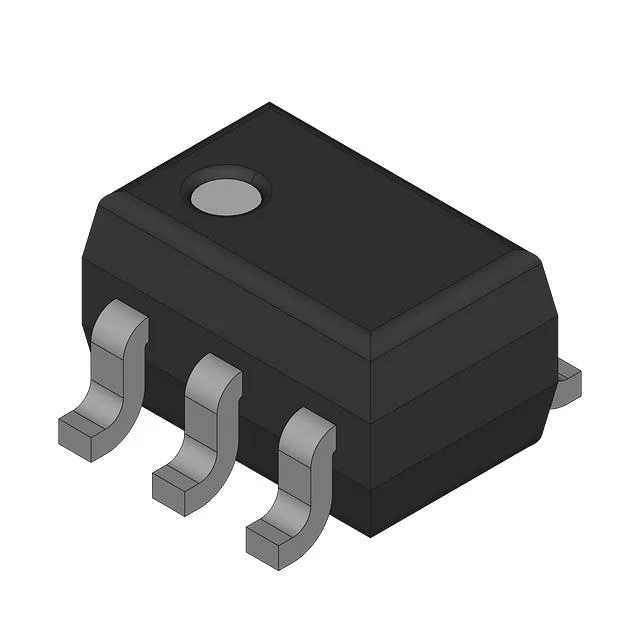
LMX331HAXK General Purpose Comparator, Open-Drain, SC-70-5

MPNLMX331HAXK
End of Life

Texas Instruments LMX331HAXK, General Purpose Comparator, 1 Element, Open-Drain Output, 600ns Propagation Delay, 1.8V to 5.5V Supply, SC-70-5 Package, -40°C to 125°C.

$0.53Ref. price · indicative, final on quote
Packaging5-TSSOP, SC-70-5, SOT-353
StockContact for availability
MOQ1 pcs
  • 100% new & originalTraceable channels only — no refurbs, no pulls, no remarked parts.
  • Date & lot codes on quoteStated per line before you commit; label photos on request.
  • MSL-compliant ESD packingMoisture-sealed bags with indicator cards; reels photo-verified.
  • PayPal buyer protectionPay by T/T, PayPal or Payoneer — card payments covered end to end.

Specifications

LMX331HAXK Technical Specifications
ParameterValue
TypeGeneral Purpose
Output typeOpen-Drain
Mounting typeSurface Mount
Voltage - input offset7mV @ 5V
Voltage - supply, single (Dual (±))1.8V ~ 5.5V
Current - output73mA @ 5V
Current - quiescent120µA
Current - input bias0.25µA @ 5V
Operating temperature-40°C ~ 125°C
PackageBulk
Hysteresis2mV
Case5-TSSOP, SC-70-5, SOT-353
CMRR, PSRR70dB PSRR
Number of elements1
Propagation delay600ns (Typ)

Product details

Key specs and what they mean on the bench

Hysteresis is 2mV internally, so you don't need external positive feedback resistors for clean switching on slow-moving signals — saves a couple of passives on the BOM. Input offset voltage max is 7mV at 5V, which sets the practical detection threshold error; for a 100mV reference, that is 7% uncertainty, so budget accordingly. Quiescent current max is 120µA, low enough for battery-powered sensor nodes that wake up periodically. Output sink capability is 73mA typical at 5V — enough to drive a small relay coil or an LED directly, but watch the package thermal limits if you run it continuous.

Package and mounting — field-swap friendly

The SC-70-5 package (also known as SOT-353) is a five-lead surface-mount package.

Lifecycle and sourcing — no LTB clock ticking

The LMX331HAXK is listed as Active on the lifecycle record — no end-of-life notice, no last-time-buy window to chase. Sourced to order through independent distribution.

Frequently asked questions

Where can I buy the LMX331HAXK and get a price?

The LMX331HAXK is sourced and quoted to order through independent distribution. Submit an RFQ for current availability and pricing — stock and price are confirmed at quote time.

What is the closest pin-compatible alternative to the LMX331HAXK?

The LMV331 in the same SC-70-5 package is a common pin-compatible alternative. The LMX331HAXK offers a wider supply range (1.8V to 5.5V vs 2.7V to 5.5V for the LMV331) and a slightly faster 600ns propagation delay versus 450ns typical for the LMV331, but both are general-purpose single comparators with open-drain outputs. Verify your voltage and speed margins before substituting.

What is the LMX331HAXK propagation delay and typical application circuit?

Propagation delay is 600ns typical. A typical application is a simple overvoltage or undervoltage detector: connect the non-inverting input to a reference voltage (e.g., from a resistor divider), the inverting input to the signal, and add a pull-up resistor on the output to your logic rail. The 2mV internal hysteresis keeps the output clean on slow edges.

Can I substitute the LMX331HAXK for the LMV331 in my circuit?

Yes, the LMX331HAXK is a drop-in replacement for the LMV331 in the SC-70-5 package if your circuit can tolerate the slightly slower 600ns propagation delay (vs 450ns typical for LMV331). The LMX331 also runs down to 1.8V, which gives you extra headroom for low-voltage designs. Check the input offset voltage and hysteresis specs against your threshold accuracy needs.

What is the difference between open-drain and push-pull output?

An open-drain output (like the LMX331HAXK) can only sink current to ground; it needs an external pull-up resistor to the desired logic voltage to produce a high level. This lets you level-shift the output to a higher voltage than the comparator's supply. A push-pull output drives both high and low internally, so no pull-up is needed, but you cannot wire-OR multiple outputs together without contention. Open-drain is preferred for mixed-voltage systems and shared interrupt lines.