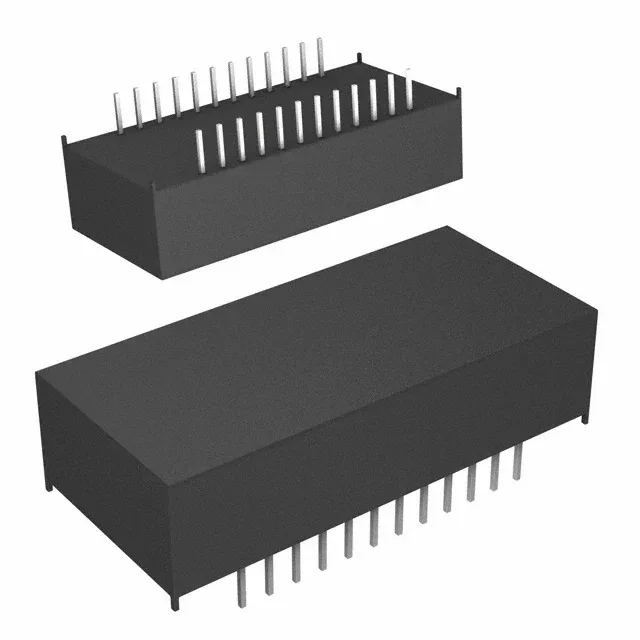
Analog Devices DS1687-3+ — DC-DC Power Modules

DS1687-3+ RTC Clock/Calendar, 242B NVSRAM, Parallel, 24-EDIP

MPNDS1687-3+
End of Life

Maxim Integrated DS1687-3+ Clock/Calendar RTC, Parallel interface, 242B NVSRAM, Y2K-compliant, 2.7V–3.7V supply, 2 mA timekeeping, 24-EDIP through-hole, 0°C–70°C.

$18.07Ref. price · indicative, final on quote
Packaging24-DIP Module (0.600", 15.24mm)
RoHSROHS3 Compliant
Sourced new & surplus through independent channelsAuthenticity-screened · ESD-safe packingListing updated Aug 2026

Specifications

DS1687-3+ specifications
ParameterValue
TypeClock/Calendar
MountingThrough Hole
Voltage2.7V ~ 3.7V
Voltage - supply, battery2.5V ~ 3.7V
Current - timekeeping2mA @ 3V
InterfaceParallel
Operating temperature0°C ~ 70°C
PackageTube
FeaturesAlarm, NVSRAM, Square Wave Output, Y2K
Date formatYY-MM-DD-dd
Memory size242B
Time formatHH:MM:SS (12/24 hr)
Case24-DIP Module (0.600\", 15.24mm)

Product details

Parallel RTC with 242 bytes of NVSRAM

The Maxim Integrated DS1687-3+ is a parallel-interface real-time clock and calendar with 242 bytes of nonvolatile SRAM integrated into a single 24-pin EDIP module. It tracks time in HH:MM:SS (12/24-hour) and date in YY-MM-DD-dd format, includes alarm, square-wave output, and Y2K compliance. The through-hole 24-DIP module (0.600-inch body) is socket-friendly — a part you can swap on site with a chip puller and no hot air.

Supply range and battery backup

Runs from a 2.7 V to 3.7 V main supply, with a separate battery input accepting 2.5 V to 3.7 V. Timekeeping current draws 2 mA max at 3 V — modest for a parallel RTC with embedded NVSRAM. The battery pin keeps the clock and the 242-byte SRAM alive when the main rail drops; a 3 V lithium coin cell (CR2032 or equivalent) is the typical choice.

Commercial temperature, active lifecycle

Frequently asked questions

Is the DS1687-3+ a direct replacement for the DS1687?

Yes, the DS1687-3+ is the 3 V supply variant of the original DS1687 (which required 5 V). The pinout and function are identical; the main difference is the supply voltage range (2.7 V to 3.7 V for the -3+ vs 4.5 V to 5.5 V for the DS1687). If your board was designed for the 5 V part, you will need to drop the main rail to 3.3 V or lower and ensure the battery voltage is within 2.5 V to 3.7 V.

What battery voltage does the DS1687-3+ require?

The battery backup input accepts 2.5 V to 3.7 V. A standard 3 V lithium coin cell (CR2032) works directly. Do not use a 5 V backup battery — it exceeds the maximum rating.