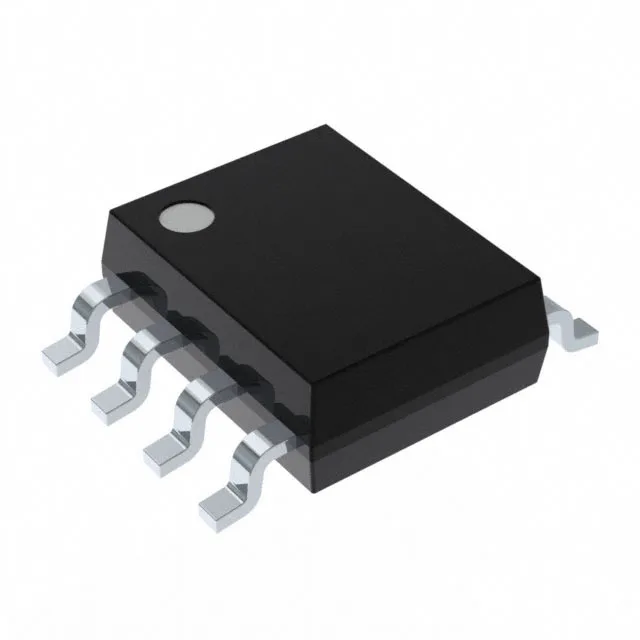
The Maxim DS1682S+ is an Elapsed Time Counter (ETC) in an 8-pin SOIC package. It tracks cumulative time on a binary counter, not calendar date/time — this is the key distinction from a real-time clock. The part communicates over an I²C (2-wire serial) bus and integrates 10 bytes of EEPROM for storing calibration data, serial numbers, or configuration flags, plus an alarm output that can be set to trigger at a programmed elapsed time.
Technical Documents
PDF / CAD
RoHS Compliant · Lead-Free
EIA-481 Standard
DS1682S+ Elapsed Time Counter, I2C, 8-SOIC, Active
MPN DS1682S+
End of Life
Spot Stock · 24-48h Dispatch
100% Original Sealed
Maxim DS1682S+ Elapsed Time Counter, I²C 2-Wire Serial interface, 10B EEPROM, Alarm, Binary Date/Time Format, 2.5V~5.5V Supply, -40°C~85°C, 8-SOIC, Tube.
In Stock: 5,314 pcs
MOQ: 1 pcs
Logistics: DHL / FedEx DAP (Global Express · 3-7d)
Russia & CIS DDP (Door-to-Door Cleared)
Dispatch: Shenzhen / HK
Unit Price (USD)
$6.78 / pc
Direct Purchase Ready
Volume Pricing Breaks Confirmed upon quotation
1+ pcs
$6.78
10+ pcs
$6.10
30+ pcs
$5.56
100+ pcs
$5.02
500+ pcs
$4.68
1,000+ pcs
$4.41
Working on a production BOM or have a target unit price? Submit Target Price
[SPEC] Essential Parameters Snapshot Full Specifications (12)
Package / Case 8-SOIC (0.154", 3.90mm Width)
Supply Voltage 2.5V ~ 5.5V
Memory / RAM 10B
Full Technical Specifications
12 Parameters| Parameter / Attribute | Specification / Value |
|---|---|
| Type | Elapsed Time Counter |
| Mounting | Surface Mount |
| Supply voltage | 2.5V ~ 5.5V |
| Current - timekeeping | 4µA ~ 15µA @ 3V ~ 5.5V |
| Interface | I²C, 2-Wire Serial |
| Operating temperature | -40°C ~ 85°C |
| Package | Tube |
| Features | Alarm, EEPROM |
| Date format | Binary |
| Memory size | 10B |
| Time format | Binary |
| Case | 8-SOIC (0.154\", 3.90mm Width) |
[DESK] Shenzhen Spot Allocation · 2h Response
Need Immediate Spot Stock or Shortage Allocation for DS1682S+?
Factory lead times blocking production? We lock verified brand-new original stock in Shenzhen within 2 hours.
Quote SLA 2 Hours
[01] Emergency Shortage 24-48h Shenzhen Dispatch
Direct access to Shenzhen floor inventory, franchised allocation buffers, and factory bonded stock to resolve line-down shutdowns.
[02] Industrial Packaging Tape & Reel / Tray / Tube
Standard factory-sealed packaging compliant with EIA-481 standards for automated high-speed SMT pick-and-place lines.
[03] WhatsApp QC Proof 45x Microscope QC Photos
High-resolution photos of original reel labels, 2D DataMatrix, and pin coplanarity sent via WhatsApp/Telegram before you release wire payment.
● USD Wire Transfer (SWIFT T/T) · DAP Express / DDP Delivery
Technical Details & Description
Frequently asked questions
Can DS1682S+ be used as a real-time clock?
No — the DS1682S+ is an Elapsed Time Counter, not a real-time clock. It tracks cumulative time on a binary counter, not calendar date or wall-clock time. For calendar/clock functions, you would need a dedicated RTC part.
DS1682S+
Verified Allocation