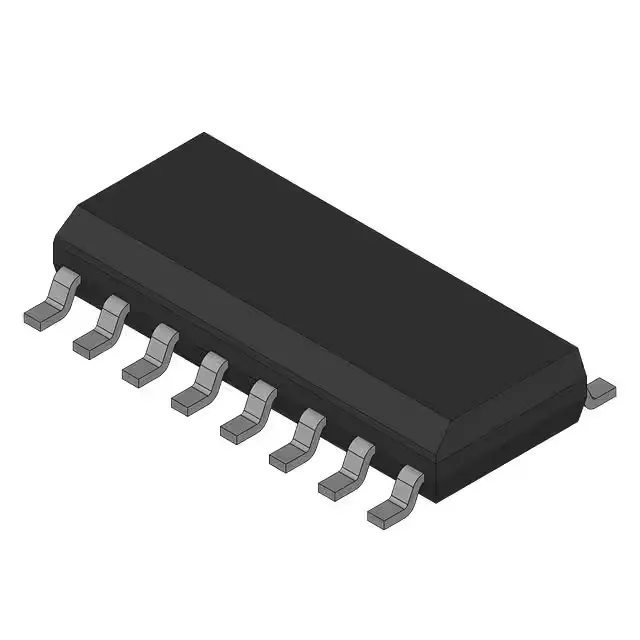
Analog Devices DG413CY+ — Analog & Data Acquisition

DG413CY+ SPST Analog Switch, 45 Ohm, 16-SOIC

MPNDG413CY+
End of Life

Maxim Integrated DG413CY+, IC SW SPST-NO/NCX4 45OHM 16SOIC, quad SPST analog switch, 45 Ohm max on-resistance, 175 ns/145 ns switching, -85 dB crosstalk @ 1 MHz, 0°C to 70°C, 16-SOIC, Tube.

$6.66Ref. price · indicative, final on quote
Packaging16-SOIC (0.154", 3.90mm Width)
StockContact for availability
MOQ1 pcs
  • 100% new & originalTraceable channels only — no refurbs, no pulls, no remarked parts.
  • Date & lot codes on quoteStated per line before you commit; label photos on request.
  • MSL-compliant ESD packingMoisture-sealed bags with indicator cards; reels photo-verified.
  • PayPal buyer protectionPay by T/T, PayPal or Payoneer — card payments covered end to end.

Specifications

DG413CY+ Technical Specifications
ParameterValue
Mounting typeSurface Mount
Voltage - supply, dual (V±)±4.5V ~ 20V
Voltage - supply, single (V+)10V ~ 30V
Current - leakage (IS(off))250pA
Operating temperature0°C ~ 70°C (TA)
PackageTube
Crosstalk-85dB @ 1MHz
Case16-SOIC (0.154\", 3.90mm Width)
Switch circuitSPST - NO/NC
Charge injection5pC
Number of circuits4
On-State resistance45Ohm
Switch time (Ton, toff)175ns, 145ns
Multiplexer (Demultiplexer circuit)1:1
Channel capacitance (CS(off), CD(off))9pF, 9pF
Channel-to-Channel matching (ΔRon)3Ohm (Max)

Product details

What this quad SPST switch brings to the bench

The Maxim Integrated DG413CY+ is a quad single-pole single-throw analog switch with a mix of normally-open and normally-closed poles (SPST - NO/NC), packaged in a 16-SOIC. It handles single-supply rails from 10 V to 30 V or dual supplies from ±4.5 V to ±20 V, making it flexible for audio routing, data acquisition front-ends, or precision signal multiplexing. The 45 Ohm max on-resistance is moderate — fine for low-frequency analog signals where a few ohms of series resistance won't kill the CMRR, but you'll want to check the voltage drop across the switch at your signal current. The 175 ns turn-on and 145 ns turn-off times keep up with most industrial sensor scanning rates.

Key specs that drive the BOM decision

Channel-to-channel matching is held to 3 Ohms max, which matters when you're switching gain-setting resistors in a programmable amplifier — the mismatch directly shifts the gain between channels. Off-leakage is 250 pA max, low enough that it won't swamp a high-impedance source in a sample-and-hold. Charge injection is 5 pC typical; that glitch couples into the hold capacitor, so budget for a settling period if you're switching into a fast ADC. The -85 dB crosstalk at 1 MHz is a solid figure for a 16-pin SOIC — it keeps the left channel out of the right in audio crosspoint applications.

Package and temperature — the fit check

The 16-SOIC body (3.90 mm width) is a common footprint; the supplier device package is also 16-SOIC, so no footprint mismatch. The operating temperature range is 0°C to 70°C.

Lifecycle and sourcing reality

The DG413CY+ is listed as Active and ROHS3 compliant, so there's no imminent last-time-buy pressure. It's a current-production Maxim part, available through independent distribution. For a BOM line that needs this exact quad switch, the supply channel is stable — no need to panic-buy or qualify a substitute unless you're dual-sourcing for resilience.

Frequently asked questions

What is the datasheet for DG413CY+?

Engineers need to verify pinout, timing, and absolute maximum ratings before design-in.

Where can I buy DG413CY+ in stock?

Buyers need immediate sourcing options to avoid production delays.

What is the price of DG413CY+?

Cost comparison is critical for BOM budgeting and procurement decisions.

Is there a replacement or equivalent for DG413CY+?

If the part goes obsolete or is out of stock, a cross-reference ensures continuity of supply.

What is the package and footprint of DG413CY+?

PCB layout designers require land pattern and package dimensions for board design.

What is the operating temperature range of DG413CY+?

Ensures the switch can perform reliably in the end application's thermal environment.