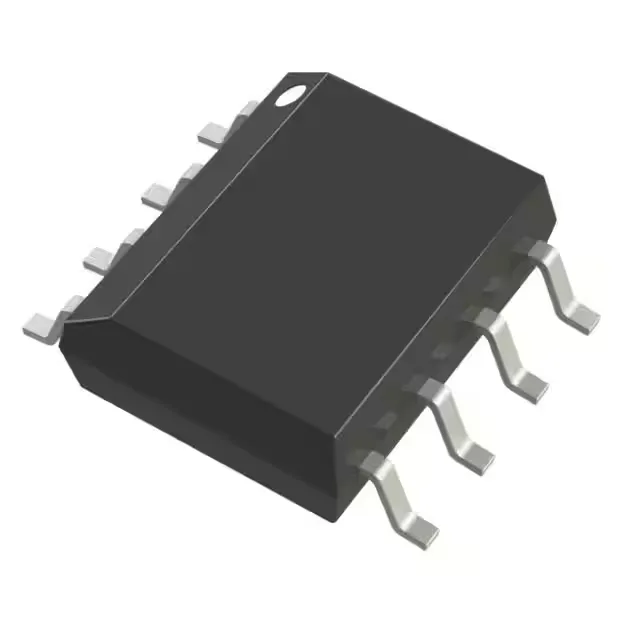
Precision difference amplifier for industrial signal chains
It is designed to extract the difference between two input voltages while rejecting common-mode signals — the classic role for a difference amplifier in sensor bridges, current-shunt monitors, and instrumentation front-ends. Key parametrics include a 25 µV input offset voltage, 3 MHz -3 dB bandwidth, and 9.5 V/µs slew rate, all running from a supply span of 12 V to 36 V.
What the 25 µV offset and 3 MHz bandwidth mean for your BOM
The 25 µV input offset is the headline precision spec. For a 100 mV full-scale shunt signal, that offset contributes 0.025% error before any gain-stage drift — tight enough for 12-bit systems without a trim pot. The 3 MHz bandwidth covers audio, vibration monitoring, and moderate-speed data acquisition; it will not support video or RF IF strips. The 45 mA output current per channel can drive an ADC input directly or a modest cable, but not a 50 Ω backplane.
Supply rails: 12 V to 36 V span, no 5 V single-supply operation
It works with ±6 V to ±18 V dual supplies or a single 12 V to 36 V supply. The 2.5 mA quiescent supply current is moderate — not a low-power contender for battery gear, but fine for line-powered industrial modules.
Package and storage: 8-SOIC, tube delivery
That is the standard small-outline footprint — no surprises for layout. Store the reels dry; MSL level is not in the record, but SOIC packages typically run MSL 1 or 2, so a dry-bake before reflow is prudent if the tube seal has been broken for more than the floor-life window.
For a production BOM, there is no urgency to stockpile or qualify a drop-in replacement. The ROHS3 exemption-free compliance means no shipping restrictions to EU or other regulated markets.