What the ±200g range and 3.2 kHz bandwidth mean for your design
The ADXL372BCCZ-RL7 is a triple-axis digital MEMS accelerometer with a full-scale range of ±200g and a 3.2 kHz output data rate bandwidth. This combination is purpose-built for capturing high-g shock events — think drop testing of portable electronics, tool impact monitoring, or crash detection in automotive safety systems — where the acceleration peak is brief but exceeds what a ±16g or ±50g part can resolve without clipping. The 10 LSB/g sensitivity at ±200g means each LSB represents 0.1g of acceleration. For a 500g impact event, the digital output would saturate at the 200g full-scale limit — the part is designed to flag over-range conditions rather than return a clipped reading, so the system knows the event exceeded the measurement window.
SPI digital interface and supply flexibility
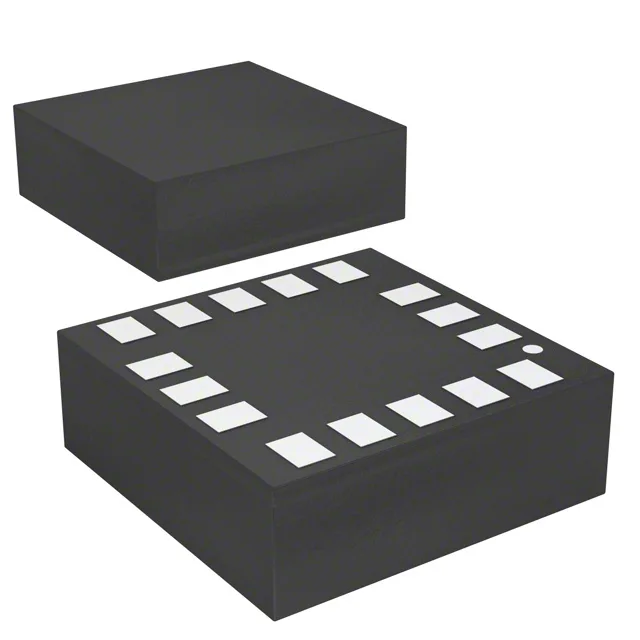
The SPI digital output connects directly to a microcontroller without an external ADC — the accelerometer handles the analog-to-digital conversion on-chip. The 16-LGA package (3x3.25 mm body,) is a land-grid array with no exposed leads — the PCB land pattern must match the 16-pin footprint, and the thermal pad under the package should be connected to a ground plane for heat sinking. The adjustable bandwidth feature lets the designer trade off noise vs response time via the SPI register — setting a lower bandwidth filters out high-frequency vibration noise when the application only needs to detect sustained shock events above 1 kHz.
The ROHS3 compliance covers the EU RoHS exemption list through 2026 — no restricted substances in the LGA package or the silicon-level processing.