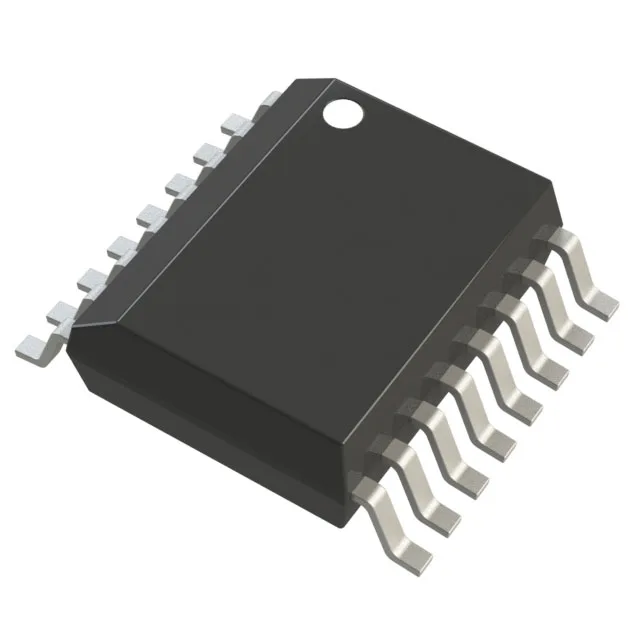
Analog Devices ADUM7441ARQZ — Digital Isolators

ADUM7441ARQZ iCoupler Digital Isolator, 1 Mbps, 1000 Vrms

MPNADUM7441ARQZ
End of Life

ADI iCoupler ADUM7441ARQZ, General Purpose digital isolator, 4 channels, 1 Mbps, 1000 Vrms isolation, 15 kV/µs CMTI, 3 V to 5.5 V supply, -40°C to 105°C, 16-QSOP.

$5.35Ref. price · indicative, final on quote
Packaging16-SSOP (0.154", 3.90mm Width)
StockContact for availability
MOQ1 pcs
  • 100% new & originalTraceable channels only — no refurbs, no pulls, no remarked parts.
  • Date & lot codes on quoteStated per line before you commit; label photos on request.
  • MSL-compliant ESD packingMoisture-sealed bags with indicator cards; reels photo-verified.
  • PayPal buyer protectionPay by T/T, PayPal or Payoneer — card payments covered end to end.

Specifications

ADUM7441ARQZ Technical Specifications
ParameterValue
TypeGeneral Purpose
SeriesiCoupler®
Channel typeUnidirectional
Mounting typeSurface Mount
Voltage3V ~ 5.5V
Voltage - isolation1000Vrms
Isolated powerNo
Operating temperature-40°C ~ 105°C
Pulse width distortion25ns
PackageTube
Data rate1Mbps
TechnologyMagnetic Coupling
Case16-SSOP (0.154\", 3.90mm Width)
Number of channels4
Inputs - side 1/Side 23/1
Rise (Fall time)2ns, 2ns
Propagation delay tpLH (tpHL)75ns, 75ns
Common mode transient immunity15kV/µs

Product details

1 Mbps data rate — what it gates for your interface

The ADUM7441ARQZ is a 4-channel, unidirectional digital isolator from ADI's iCoupler family, built with magnetic coupling. Its 1 Mbps maximum data rate sets the ceiling for the serial interfaces it can isolate cleanly — think UART, low-speed SPI, or GPIO-level signals. For isolated SPI at higher clock rates (e.g., 10 MHz+), you would step up to a faster-rated iCoupler variant. Propagation delay is 75 ns max typ on both edges, with 25 ns pulse-width distortion, which is fine for most sensor readouts and configuration busses running under 1 MHz.

1000 Vrms isolation and 15 kV/µs CMTI — where it sits in the system

Rated for 1000 Vrms isolation, this part handles basic functional isolation between low-voltage control domains and a separate power stage — think digital lines crossing an isolated DC/DC boundary or breaking ground loops in industrial sensor interfaces. The 15 kV/µs common-mode transient immunity (minimum) means it holds its state through fast switching edges, so it is a reasonable fit for motor-drive inverter legs or IGBT gate-driver feedback paths where noise couples across the barrier. The 3/1 input-to-output channel count gives you three channels driving from Side 1 to Side 2 and one reverse-direction channel, which maps neatly to a three-signal SPI (SCLK, MOSI, CS) plus a return MISO line.

Package and footprint

Surface-mount only — no through-hole option. The narrow body saves board area compared to a wider SOIC, but check your assembly house's capability for fine-pitch soldering; the 0.025" (0.635 mm) pitch is standard for QSOP but may require a tighter stencil aperture than a standard SOIC.

Lifecycle and compliance

There is no LTB window to plan around. ROHS3 compliant per.

Frequently asked questions

What is the difference between ADUM7441ARQZ and ADUM7442ARQZ-RL7?

Both are 4-channel unidirectional iCoupler isolators with identical data rate, isolation voltage, CMTI, and package. The difference is the channel direction split: ADUM7441ARQZ has a 3/1 input-to-output configuration (three forward, one reverse), while the ADUM7442ARQZ-RL7 uses a 2/2 split. Choose the 7441 when you need three forward channels and one return; the 7442 when you need two in each direction.

Is ADUM7441ARQZ RoHS compliant?

Yes, ADUM7441ARQZ is ROHS3 compliant per the manufacturer's listing.

Can ADUM7441ARQZ be used for SPI isolation?

Yes, for SPI running at 1 Mbps or slower. The 3/1 channel count maps to SCLK, MOSI, and CS on Side 1 and MISO on Side 2. The 75 ns propagation delay and 25 ns pulse-width distortion are acceptable for most SPI transactions at this data rate. For faster SPI (10 MHz+), consider a higher-speed iCoupler variant with lower propagation delay.