Four-channel isolator with onboard DC-DC — what it saves on the BOM
This eliminates the separate isolated DC-DC module or transformer driver that a standard optocoupler or capacitive isolator would need, shrinking the BOM and board area for isolated interface designs.
At 25Mbps, this part handles most industrial serial links — SPI clocks up to 25 MHz, UART at standard baud rates, and parallel GPIO handshake lines. The 60ns max propagation delay (tpLH/tpHL) and 6ns max pulse-width distortion mean the signal edge timing stays tight enough that a 25 MHz SPI bus won't lose setup/hold margin across the isolation barrier. Rise and fall times are 2.5ns typical, so the output slew rate is fast — the 16-SOIC footprint keeps the trace short, but if the isolated side drives a long cable, a series resistor at the output may be needed to damp ringing.
Supply range and isolated power — design-in checklist
That means the design only needs one regulated input rail — no separate isolated DC-DC, no transformer, no secondary-side regulator. The output power from the IsoPower converter is limited (typically tens of milliamps at 5V), so the secondary side can power the isolator's own output buffers and a small external load like a transceiver or a low-power sensor, but not a relay coil or a high-current peripheral. If the secondary-side current budget is tight, the 3V to 5.5V supply range lets you run both sides at 3.3V or 5V, matching common logic families without level shifters.
Temperature grade and package — where it fits
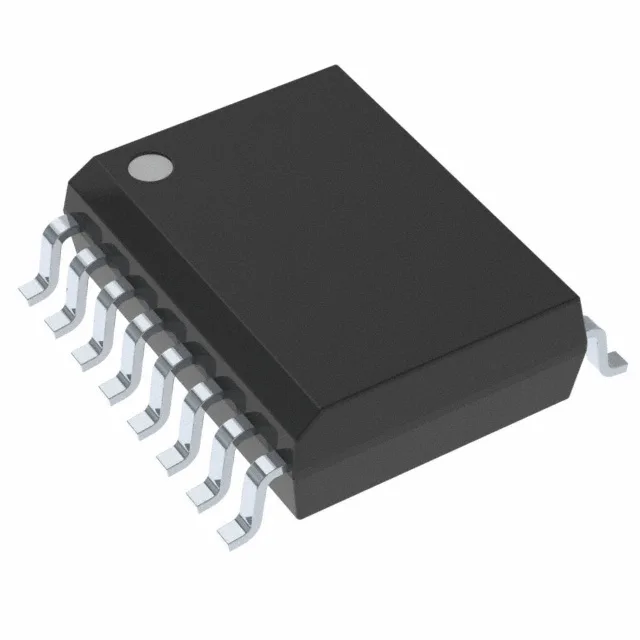
The 16-SOIC (7.50mm width) body is a standard footprint — no special pad pattern beyond the usual SOIC-16 land. The wider body (300 mil vs the narrow 150 mil) helps with creepage distance across the PCB for the 2500Vrms isolation rating.