Automotive-grade galvanic isolation for control and sensor interfaces
It provides 2500Vrms galvanic isolation with a 1Mbps data rate, targeting automotive and industrial applications where signal integrity across a safety barrier is required.
The 2500Vrms isolation rating meets basic reinforced isolation requirements for many automotive and industrial power systems. The 1Mbps data rate is adequate for most sensor readback, fault flags, and low-speed control signals — not for high-throughput video or gigabit links.
Propagation delay and pulse-width distortion — timing budget considerations
Maximum propagation delay is 50ns in both directions, with a pulse-width distortion of 5ns max. For a 1Mbps signal (1µs period), the 50ns delay consumes 5% of the bit period — acceptable for most control loops but worth budgeting in a daisy-chained SPI or time-critical fault path. Rise and fall times are 2.5ns typical, which keeps edge-rate-induced ringing manageable on short PCB traces.
Package and supply — 8-SOIC, 3V to 5.5V rails
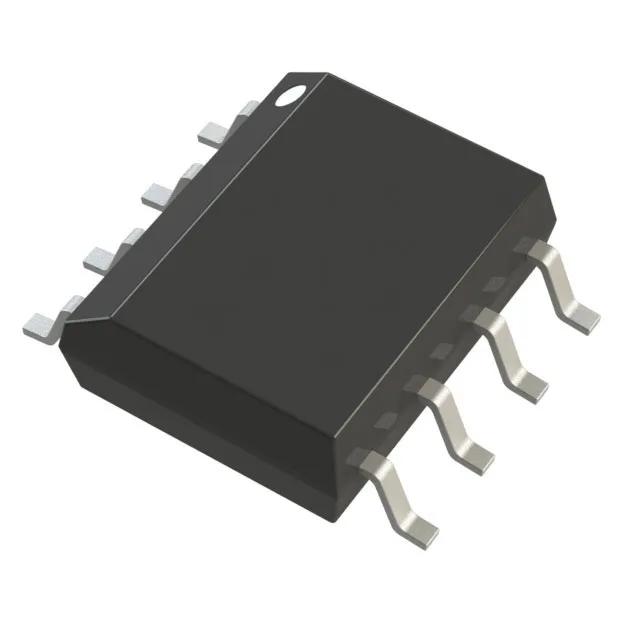
Housed in an 8-SOIC (0.154" width) with surface-mount footprint. Supply range from 3V to 5.5V on each side, allowing direct interface with 3.3V or 5V logic domains without an external level translator. No isolated power output — this is a signal-only isolator; the secondary-side Vdd must be supplied separately.
This part is suitable for qualification into production BOMs without near-term supply risk.