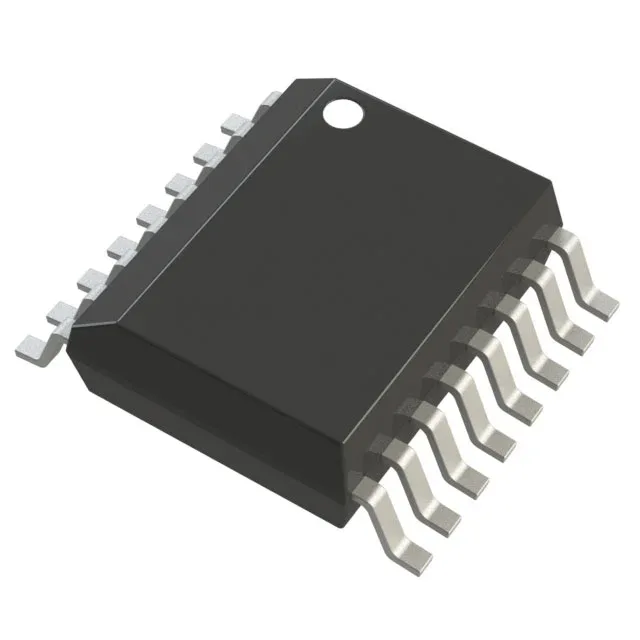
Analog Devices ADUM140E1BRQZ-RL7 — Digital Isolators

ADUM140E1BRQZ-RL7 iCoupler Digital Isolator, 150 Mbps, 4-Ch

MPNADUM140E1BRQZ-RL7
End of Life

Analog Devices iCoupler ADUM140E1BRQZ-RL7, General Purpose digital isolator, 4 channels unidirectional, 150Mbps data rate, 3000Vrms isolation, 1.7V~5.5V supply, -40°C~125°C, 16-QSOP package, Tape & Reel.

$4.23Ref. price · indicative, final on quote
Packaging16-SSOP (0.154", 3.90mm Width)
StockContact for availability
MOQ1 pcs
  • 100% new & originalTraceable channels only — no refurbs, no pulls, no remarked parts.
  • Date & lot codes on quoteStated per line before you commit; label photos on request.
  • MSL-compliant ESD packingMoisture-sealed bags with indicator cards; reels photo-verified.
  • PayPal buyer protectionPay by T/T, PayPal or Payoneer — card payments covered end to end.

Specifications

ADUM140E1BRQZ-RL7 Technical Specifications
ParameterValue
TypeGeneral Purpose
SeriesiCoupler®
Channel typeUnidirectional
Mounting typeSurface Mount
Voltage1.7V ~ 5.5V
Voltage - isolation3000Vrms
Isolated powerNo
Operating temperature-40°C ~ 125°C
Pulse width distortion3ns
PackageTape & Reel (TR); Cut Tape (CT)
Data rate150Mbps
TechnologyMagnetic Coupling
Case16-SSOP (0.154\", 3.90mm Width)
Number of channels4
Inputs - side 1/Side 24/0
Rise (Fall time)2.5ns, 2.5ns
Propagation delay tpLH (tpHL)13ns, 13ns
Common mode transient immunity75kV/µs

Product details

150 Mbps across a 3000 Vrms barrier — what that buys the design

The ADUM140E1BRQZ-RL7 is a four-channel, unidirectional digital isolator from Analog Devices' iCoupler series, built on magnetic coupling technology. It shoves 150 Mbps through each channel with a 3000 Vrms isolation barrier, which puts it squarely in the sweet spot for industrial fieldbus isolation (Profibus, CAN, RS-485) and high-speed digital links where you need galvanic separation without the throughput penalty of optocouplers.

75 kV/µs CMTI — the spec that keeps data clean in a noisy environment

Common-mode transient immunity of 75 kV/µs (minimum) is the number that matters when this isolator sits between a microcontroller and a motor-drive power stage or an inverter phase leg. Those fast-switching edges from the IGBT or SiC FET can couple several kilovolts per microsecond across the barrier; if the CMTI is too low, you get bit flips or latch-up. At 75 kV/µs, this part has enough margin for most industrial drives and even some automotive traction inverters. The 2.5 ns typical rise/fall time and 13 ns max propagation delay keep the signal integrity tight for timing-critical loops like PWM gating or encoder feedback.

16-QSOP — footprint and layout reality

It's a surface-mount part, so reflow is the assembly path. No isolated power on-chip — the ADUM140E1BRQZ-RL7 is a signal isolator only; you still need a separate DC-DC converter or an isolated module to power the secondary side if the application requires isolated power. The unidirectional channel configuration (4 inputs on side 1, 0 on side 2) means all four channels run the same direction — useful for SPI, UART, or parallel data buses where the data flows one way.

Lifecycle and compliance — no end-of-life surprises

It is ROHS3 compliant, which clears the environmental requirements for EU-market equipment and most global OEM specs.

Frequently asked questions

What is the difference between ADUM140E1BRQZ and ADUM140E0BRQZ?

The ADUM140E1BRQZ and ADUM140E0BRQZ differ in their input/output logic direction configuration. The ADUM140E1BRQZ has all four channels configured as inputs on side 1 with no outputs on side 2 (4/0 unidirectional), while the ADUM140E0BRQZ has a different channel direction arrangement. Both share the same 150 Mbps data rate, 3000 Vrms isolation, and 16-QSOP package. The choice depends on which side of the isolation barrier your data flows from.

Can ADUM140E1BRQZ be used for I2C isolation?

No, the ADUM140E1BRQZ is a unidirectional isolator with all four channels running the same direction (4 inputs on side 1, 0 on side 2). I2C is a bidirectional bus that requires data to flow in both directions on the same line, which this part cannot support. For I2C isolation, you would need a dedicated bidirectional isolator or a part with configurable direction channels.