Dual-channel thermal monitoring for processor and system management
The ADT7481ARMZ-R7-AD: The remote channel covers -64°C to 191°C, which is wide enough to track a processor core under heavy load or during thermal runaway. Local accuracy is ±1°C typical, remote accuracy ±2.5°C — the remote figure is looser because it depends on the ideality factor of the external transistor, but it is still tight enough for overtemperature protection and fan-speed control. Communication is over the SMBus, a two-wire interface derived from I²C that is standard on server, telecom, and industrial control backplanes.
One-Shot, programmable limits, and standby — what the features mean for firmware
The One-Shot feature lets firmware trigger a single conversion cycle and then return the part to a low-power state — useful in battery-backed or duty-cycled systems where continuous monitoring would waste power. The programmable limit registers allow setting high and low temperature thresholds; when exceeded, the output switch (an open-drain pin) asserts without polling, so a simple pull-up resistor can gate a system-shutdown signal or fan tachometer. Standby mode drops the quiescent current to microamp levels, preserving energy during idle periods. The combination of One-Shot and standby means the sensor can wake, sample, compare against the programmed limits, and go back to sleep — all without host intervention until a limit is crossed.
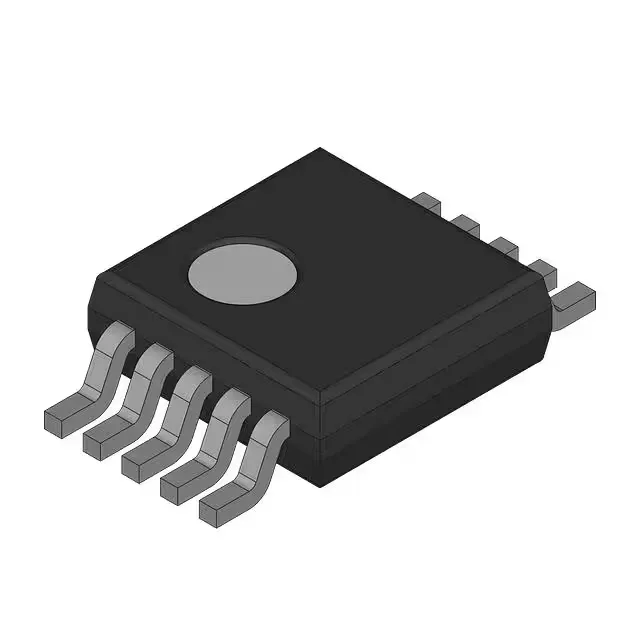
The 0.5 mm lead pitch demands a controlled solder-paste stencil and careful pad design — a standard 0.25 mm stencil aperture with a 0.30 mm pad width on a 0.65 mm pitch land pattern works. The package is surface-mount only; no through-hole variant exists. Supplied in Bulk packaging — loose tubes, not tape-and-reel. If your pick-and-place line is set up for 8 mm tape feeders, you will need to transfer the parts to tape or use a tube feeder. The -R7 suffix normally indicates a 7-inch reel, but here the evidence lists Bulk, so confirm the packaging format with your supplier before committing the line.
The operating temperature range is -40°C to 120°C, which covers industrial enclosures, telecom cabinets, and under-hood automotive (non-safety) applications. At 120°C the accuracy is not guaranteed by the test condition, but the device will still function — expect wider drift above 100°C.