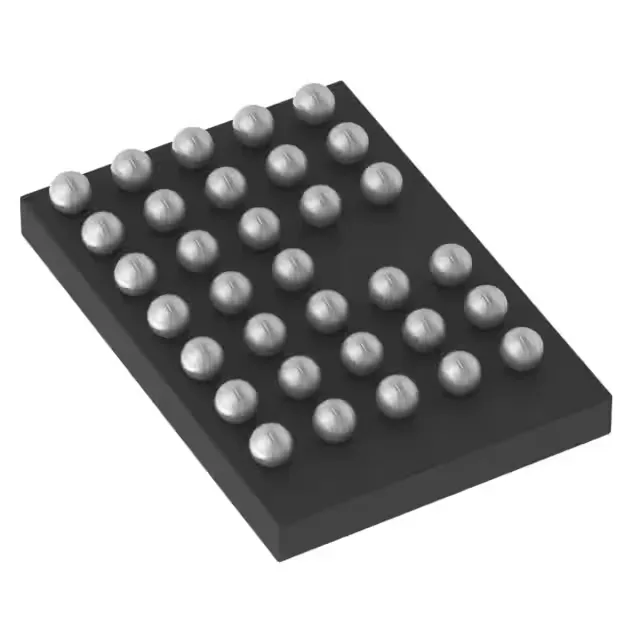
What this part is and where it fits
The ADPD4101BCBZR7 is a fully integrated optical front end from Analog Devices, designed for wearable health and fitness monitoring. It sits between the photodiode array and the host processor, handling the LED drive, photodiode signal conditioning, and ambient light rejection in one chip. It draws just 10 µA from the supply in its lowest-power operating mode, which means a wrist-worn device measuring heart rate or SpO₂ every few seconds can run for weeks on a 100 mAh coin cell.
Housed in a 33-ball WLCSP measuring 3.11 x 2.14 mm (supplier device package 33-WLCSP), this is a fine-pitch, no-lead package that requires a clean solder paste stencil and a reflow profile matched to the 0.4 mm ball pitch. The exposed die face means the optical window must be clear of underfill — plan the stencil aperture to avoid bridging under the die edge. Surface-mount only, and the WLCSP is not hand-solderable without a hot-air station and a practiced hand.
Digital I²C output and system integration
The output is pure I²C — no analog signal path to the host. That simplifies the PCB layout: a two-wire bus (SDA, SCL) plus interrupt and power. The host reads back processed photodiode data, not raw photocurrent, so the firmware does not need to handle the analog front-end timing. Input type is digital, meaning the photodiode interface is internal to the AFE. The host does not drive the LED timing directly; the ADPD4101 handles the pulse train and integrates the return signal.
RoHS3 compliant, with no exemptions noted.