What the PSRR curve means for your rail
The ADP7118ARDZ-2.5-R7 delivers 88 dB of PSRR at 10 kHz, tapering to 50 dB at 1 MHz. That 88 dB at 10 kHz means the output ripple from a 20 V input switching at 10 kHz gets attenuated by a factor of roughly 25,000 — the downstream ADC or PLL sees a clean rail even when the upstream converter is noisy. At 1 MHz the PSRR drops to 50 dB, still sufficient to knock down 1 MHz switching noise from a buck converter to under 100 µV at the output, assuming a typical 10 mV input ripple.
Dropout voltage and input headroom
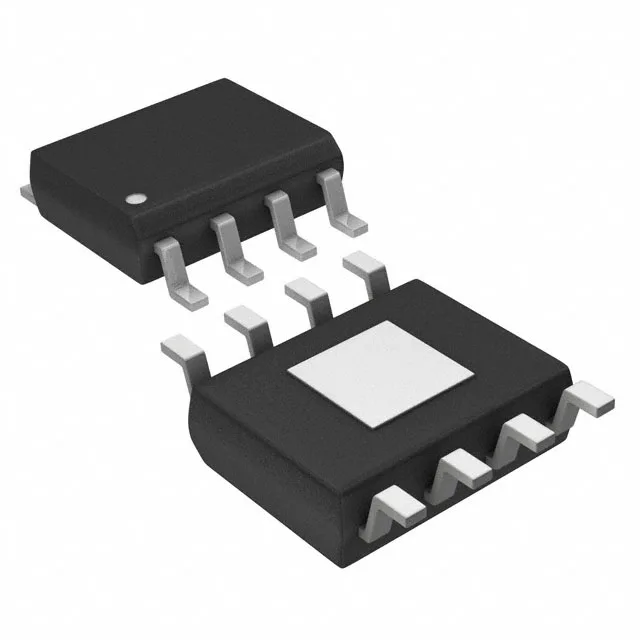
Maximum dropout is 0.42 V at the full 200 mA load. The 20 V absolute max input means this part can also regulate down from a 12 V or 15 V intermediate bus without an external pre-regulator. The 140 µA quiescent current and 320 µA max supply current are low enough that the LDO's own draw doesn't dominate the thermal budget in always-on applications. At 200 mA load with 3.3 V input, the power dissipation is roughly 0.16 W — the exposed pad on the 8-SOIC-EP package handles that without forced airflow, but the PCB copper area under the pad should follow the datasheet layout recommendation to keep the junction below 125 °C.
The fixed 2.5 V output and 200 mA current rating are confirmed on the BOM line.