Analog Devices ADN4651BRWZ — Digital Isolators

ADN4651BRWZ LVDS Isolator, 600 Mbps, 5000 Vrms, iCoupler

MPNADN4651BRWZ
End of Life

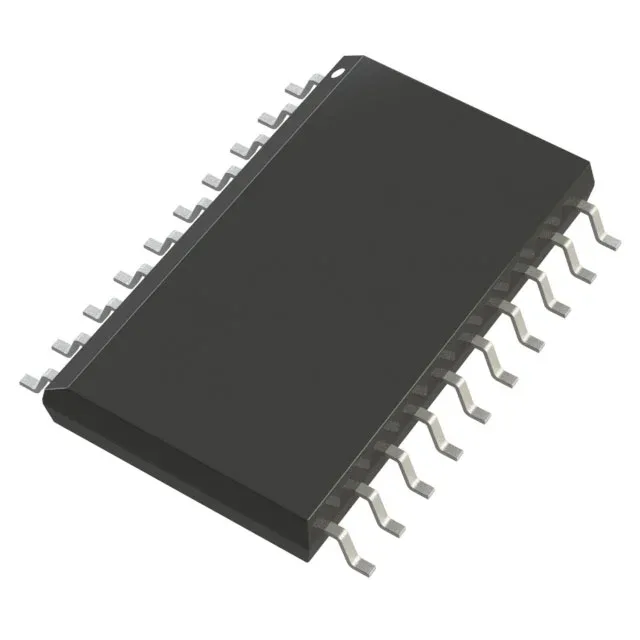
Analog Devices iCoupler® ADN4651BRWZ, LVDS digital isolator, 2-channel unidirectional, 600 Mbps data rate, 5000 Vrms isolation, 25 kV/µs CMTI, 4.5ns propagation delay, 2.375V-2.625V supply, -40°C to 125°C, 20-SOIC.

$15.33Ref. price · indicative, final on quote
Packaging20-SOIC (0.295", 7.50mm Width)
StockContact for availability
MOQ1 pcs
  • 100% new & originalTraceable channels only — no refurbs, no pulls, no remarked parts.
  • Date & lot codes on quoteStated per line before you commit; label photos on request.
  • MSL-compliant ESD packingMoisture-sealed bags with indicator cards; reels photo-verified.
  • PayPal buyer protectionPay by T/T, PayPal or Payoneer — card payments covered end to end.

Specifications

ADN4651BRWZ Technical Specifications
ParameterValue
TypeLVDS
SeriesiCoupler®
Channel typeUnidirectional
Mounting typeSurface Mount
Voltage2.375V ~ 2.625V
Voltage - isolation5000Vrms
Isolated powerNo
Operating temperature-40°C ~ 125°C
PackageTube
Data rate600Mbps
TechnologyMagnetic Coupling
Case20-SOIC (0.295\", 7.50mm Width)
Number of channels2
Inputs - side 1/Side 21/1
Rise (Fall time)0.35ns, 0.35ns (Max)
Propagation delay tpLH (tpHL)4.5ns, 4.5ns
Common mode transient immunity25kV/µs

Product details

600 Mbps LVDS isolator with reinforced isolation

The Analog Devices ADN4651BRWZ is a two-channel, unidirectional LVDS digital isolator from the iCoupler® family, built on magnetic coupling technology. It delivers a 600 Mbps data rate per channel with a 4.5ns propagation delay, making it suitable for high-speed serial links where galvanic isolation is required. The 5000 Vrms isolation rating and 25 kV/µs common-mode transient immunity (CMTI) target industrial motor drives, inverter systems, and medical equipment where fast voltage transients and safety isolation are design constraints.

5000 Vrms isolation — what it buys you

The 5000 Vrms isolation voltage is a reinforced-grade rating, not basic isolation. That matters when the isolator sits between a 2.5V LVDS controller and a high-voltage domain in motor drives, grid-tied inverters, or patient-connected medical electronics. The 25 kV/µs CMTI ensures the data link stays intact when a fast common-mode transient — say from an IGBT switching event — slams across the isolation barrier. At 0.35ns rise and fall times, the edges are clean enough for 600 Mbps signaling without excessive jitter, but the fast edges also mean the PCB layout around the SOIC-20 footprint needs controlled impedance traces and a solid ground plane under the isolation gap.

2.5V supply rail — not a 3.3V part

The ADN4651BRWZ runs on a 2.375V to 2.625V supply — a tight 2.5V ±5% rail. This is not a generic 3.3V or 5V isolator; it is designed specifically for LVDS signal chains that operate at 2.5V. If your system already has a 2.5V rail for the LVDS transceiver, this part drops in. If you are trying to interface with a 3.3V logic domain, you will need level translation on the input side or a different isolator variant. The unidirectional channel configuration (one input on side 1, one input on side 2) supports a single LVDS pair in each direction, which matches point-to-point links where the data flow is known at design time.

Active lifecycle and compliance

For dual-sourcing flexibility, the ADN4651BRSZ-RL7 is a functional peer with the same 600 Mbps data rate and 1/1 input configuration but rated at 3750 Vrms isolation in a smaller package variant — a trade-off of isolation voltage for board area when 5000 Vrms is not required.

Frequently asked questions

Is ADN4651BRWZ RoHS compliant and lead-free?

Yes, the ADN4651BRWZ is ROHS3 compliant per the manufacturer's listing.

Can ADN4651BRWZ be used with a 2.5V supply?

Yes, the ADN4651BRWZ operates from a 2.375V to 2.625V supply, which is a 2.5V nominal rail with ±5% tolerance.

Are there any equivalent or replacement parts for ADN4651BRWZ?

The ADN4652BRWZ-RL7 offers the same 5000 Vrms isolation with a different channel direction mapping. Neither is a drop-in replacement — verify the isolation voltage and channel configuration against your design.