600 Mbps LVDS isolator for high-speed serial links
The Analog Devices ADN4651BRSZ-RL7 is a two-channel, unidirectional LVDS digital isolator from the iCoupler family, built on magnetic coupling technology. It delivers a 600 Mbps data rate per channel with a 4.5 ns propagation delay, making it suited for isolating high-speed serial interfaces like SPI, UART, or LVDS clock/data lines in industrial and telecom systems. The supply range is 2.375 V to 2.625 V, so the part runs from a 2.5 V rail — not 3.3 V or 1.8 V without a regulator.
The 3750 Vrms isolation voltage is a 1-minute withstand rating, typical for reinforced single isolation in industrial and medical applications. If the isolator's CMTI is too low, data corruption or latch-up occurs. At 25 kV/µs, the ADN4651BRSZ-RL7 handles the edge rates from SiC and GaN half-bridges, not just IGBTs.
2.5 V supply — not a 3.3 V part
The supply voltage is 2.375 V to 2.625 V, which is a 2.5 V nominal rail. This is narrower than the 3.0 V to 5.5 V range on many digital isolators. If the system runs 3.3 V LVDS, a local 2.5 V LDO is needed for this isolator. The LVDS I/O levels are CML-like and AC-coupled in many designs, so the supply mismatch is manageable, but the BOM must include the regulator. The 2.5 V rail also limits the input logic threshold: the VIH/VIL levels follow LVDS standards, not TTL or CMOS.
20-SSOP package and tape-and-reel suffix
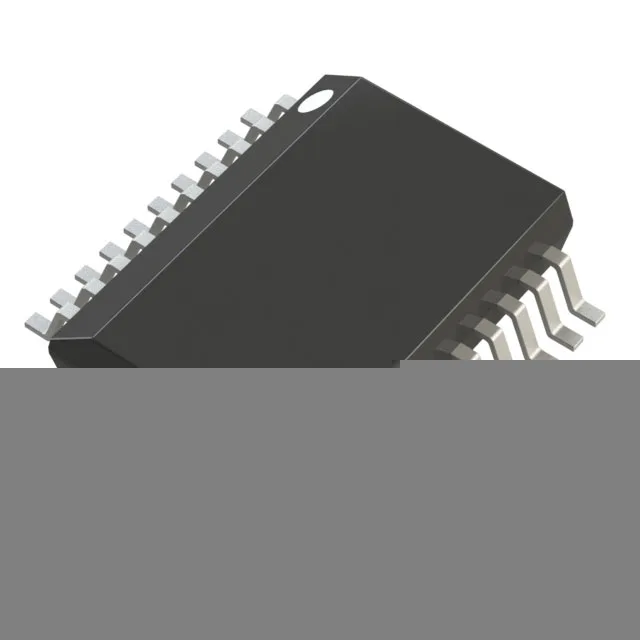
The part comes in a 20-lead SSOP body, 5.30 mm wide, surface-mount. The BRSZ base code shares the same 20-SSOP footprint and electrical specs across both suffixes.
The iCoupler platform is a mature, multi-sourced process at ADI, so PCN frequency is low.