Quad LVDS isolator at 2.5 Gbps — what the isolation specs mean for your BOM
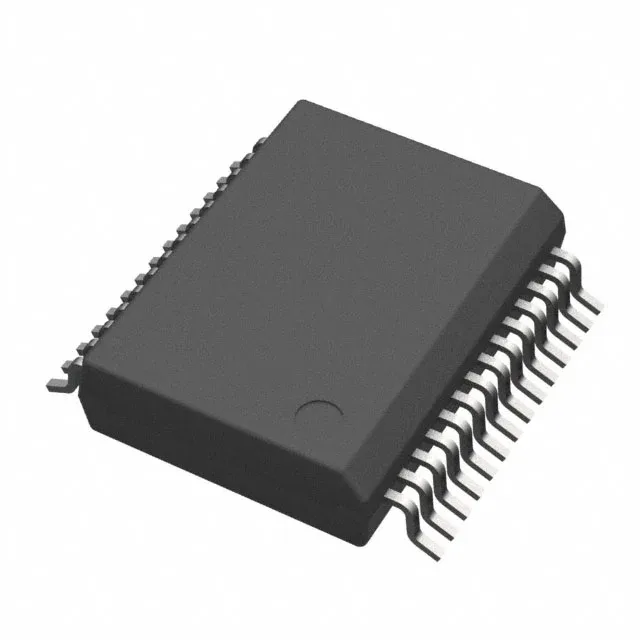
The ADN4624BRNZ: The four inputs are all on side 1, with four LVDS outputs on side 2 — a 4+0 configuration that suits downstream clock or data distribution from a single source.
5700 Vrms and 40 kV/µs CMTI — where this part earns its keep
The headline isolation rating of 5700 Vrms is reinforced by a minimum common-mode transient immunity of 40 kV/µs. That CMTI number is the one that matters in motor drives, solar inverters, and industrial power stages where fast-switching SiC or GaN FETs slam the common-mode voltage. If your system sees switching edges that couple across a barrier, 40 kV/µs keeps the data eye open and avoids bit errors. The 2.8 ns max propagation delay (tpLH / tpHL) means the isolator adds negligible skew to a high-speed serial link — you can run it in a 2.5 Gbps LVDS chain without re-timing.
The wide body gives good clearance for creepage on the PCB, which matters when you're routing 5700 Vrms isolation traces.
The magnetic coupling technology doesn't suffer the LED aging that optocouplers do, so the isolation performance holds across the full temperature window over the product's service life.