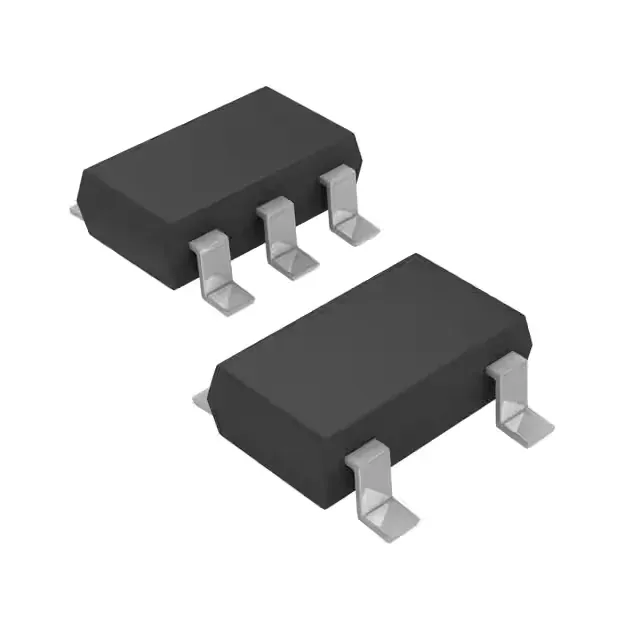
What the PSRR spec means for noise-sensitive rails
The ADM7160AUJZ-1.8-R2 delivers a PSRR of 54 dB at 100 kHz, dropping to 43 dB at 1 MHz — this is the rejection envelope for switching noise from a buck converter or charge pump upstream. A 54 dB rejection at 100 kHz means a 10 mV ripple on the input is attenuated to roughly 20 µV at the output, which is clean enough to power an ADC reference or a PLL supply without an additional LC filter.
Dropout, quiescent current, and thermal budget
Maximum dropout voltage is 230 mV at the full 200 mA load — the input rail needs to stay at least 230 mV above 1.8 V across the load range to keep the output in regulation. Quiescent current is just 20 µA typical, so the regulator's own draw is negligible in battery-powered designs; the 350 µA maximum supply current covers the full operating envelope including the internal reference and protection circuits. The -40°C to +125°C operating temperature range covers automotive under-hood and industrial ambient extremes — the TSOT-23-5 package's thermal resistance must be factored into the derating calculation at high ambient and full load.