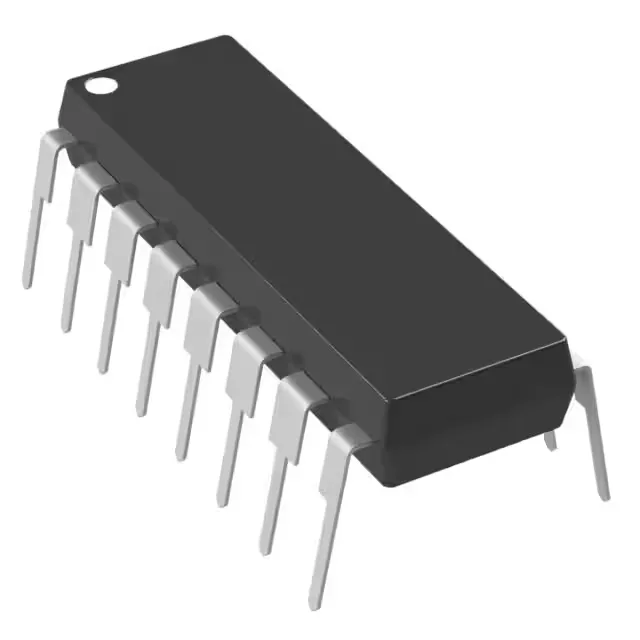
RS232 link on a through-hole footprint
It handles a 120 Kbps data rate on a 4.5 V to 5.5 V supply rail, with 650 mV of receiver hysteresis for noise immunity on longer cable runs. The through-hole DIP footprint suits legacy backplanes, industrial controller boards, and prototype assemblies where wave-solder or manual rework is the norm.
Still active — no last-time-buy clock ticking
There is no NRND flag or EOL notice on this part, so it remains a safe line-item for both new builds and sustaining production. No date-code scramble or LTB deadline to manage.
At 120 Kbps the part is tuned for RS232's original asynchronous character-oriented traffic — terminal links, PLC serial ports, and instrument data logs. It will not sustain the multi-Mbps rates of newer transceivers, but for its class the 650 mV of receiver hysteresis is a deliberate margin: it rejects ground-shift noise that creeps into long, unshielded serial cables in factory-floor or lab environments.
Through-hole PDIP — board-fit and assembly note
The 16-lead PDIP (0.300″ body width) is a standard 7.62 mm-pitch footprint shared by countless legacy RS232 parts. For new layouts the PDIP is fine for socketed or hand-assembled boards; for high-volume SMT lines the LJRZ variant avoids a separate wave-solder pass.