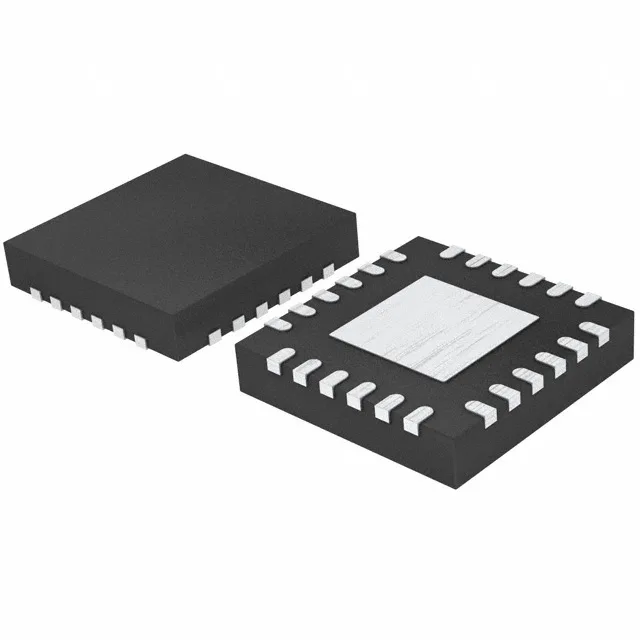
Analog Devices ADF4360-2BCPZRL7 — Analog & Data Acquisition

ADF4360-2BCPZRL7 Integer-N Synthesizer, 2.17 GHz

MPNADF4360-2BCPZRL7
End of Life

Analog Devices ADF4360-2BCPZRL7, Integer N Synthesizer (RF) with integrated VCO, 2.17 GHz max frequency, 1:2 fanout clock output, 24-LFCSP (4x4) package, -40°C to 85°C, 3V to 3.6V supply.

$10.04Ref. price · indicative, final on quote
Packaging24-WFQFN Exposed Pad, CSP
StockContact for availability
MOQ1 pcs
  • 100% new & originalTraceable channels only — no refurbs, no pulls, no remarked parts.
  • Date & lot codes on quoteStated per line before you commit; label photos on request.
  • MSL-compliant ESD packingMoisture-sealed bags with indicator cards; reels photo-verified.
  • PayPal buyer protectionPay by T/T, PayPal or Payoneer — card payments covered end to end.

Specifications

ADF4360-2BCPZRL7 Technical Specifications
ParameterValue
TypeFanout Distribution, Integer N Synthesizer (RF)
Mounting typeSurface Mount
Voltage3V ~ 3.6V
Frequency2.17GHz
Operating temperature-40°C ~ 85°C
PLLYes
InputCMOS, TTL
OutputClock
PackageTape & Reel (TR); Cut Tape (CT)
Case24-WFQFN Exposed Pad, CSP
Divider (Multiplier)Yes/No
Number of circuits1
Ratio - Input:Output1:2
Differential - Input:OutputNo/No

Product details

2.17 GHz integer-N synthesizer with integrated VCO

The Analog Devices ADF4360-2BCPZRL7 is an integer-N synthesizer (RF) with an integrated voltage-controlled oscillator, delivering clock outputs up to 2.17 GHz. It accepts CMOS or TTL reference inputs and provides a single-ended clock output through a 1:2 fanout buffer. The part operates from a 3V to 3.6V supply and includes an on-chip divider (yes) but no multiplier. Housed in a 24-LFCSP (4x4 mm) package with an exposed pad for thermal management, it is rated for the industrial temperature range of -40°C to 85°C. Typical applications include wireless infrastructure basestations, microwave point-to-point radios, test equipment, and any RF local-oscillator chain needing a compact, integer-N PLL with a built-in VCO.

Package and mounting

The 3V to 3.6V supply range covers standard 3.3V rails with margin. At 3.3V nominal, the PLL and VCO blocks are fully specified; the part will hold lock across the full -40°C to 85°C range, which covers outdoor telecom cabinets and unconditioned industrial enclosures. The 24-LFCSP exposed pad must be soldered to a ground plane — without a thermal via stitch under the pad, the VCO phase noise degrades above 70°C case temperature. The 1:2 fanout means one reference input drives two clock outputs internally; both outputs are single-ended, not differential, so routing to a differential receiver needs an external balun or AC-coupling with a bias tee.

Active production — no LTB risk

The ADF4360-2BCPZRL7 carries an active lifecycle status with ROHS3 compliance. For new designs, this part is a safe selection; for production replenishment, the supply channel is stable through authorized distribution and independent stock.

Tray vs reel — the ADF4360-2BCPZ difference

The closest functional equivalent is the ADF4360-2BCPZ, which shares the same die, PLL architecture, 2.17 GHz max frequency, 24-LFCSP package, and temperature grade. The only difference is packaging medium: the -2BCPZRL7 ships in tape and reel (suitable for volume assembly), while the -2BCPZ ships in tray (prototyping and low-volume hand assembly). Both are electrically identical and pin-compatible. For a production BOM, the RL7 variant is the correct line item; for a lab bench build, the tray part is easier to handle without a feeder.

Frequently asked questions

Is ADF4360-2BCPZRL7 compatible with 3.3V systems?

Yes, the supply range of 3V to 3.6V includes 3.3V nominal. The PLL and VCO are fully specified at 3.3V across the full -40°C to 85°C operating range. No external regulator is needed if the 3.3V rail is clean within ±0.3V.

What is the difference between ADF4360-2BCPZRL7 and ADF4360-2BCPZ?

They are electrically identical — same die, same 2.17 GHz max frequency, same 24-LFCSP package, same temperature range. The only difference is the shipping format: the RL7 suffix is tape and reel for volume SMT assembly; the non-RL7 suffix is tray for prototyping and low-volume hand assembly. Both are pin-compatible and interchangeable on the board.