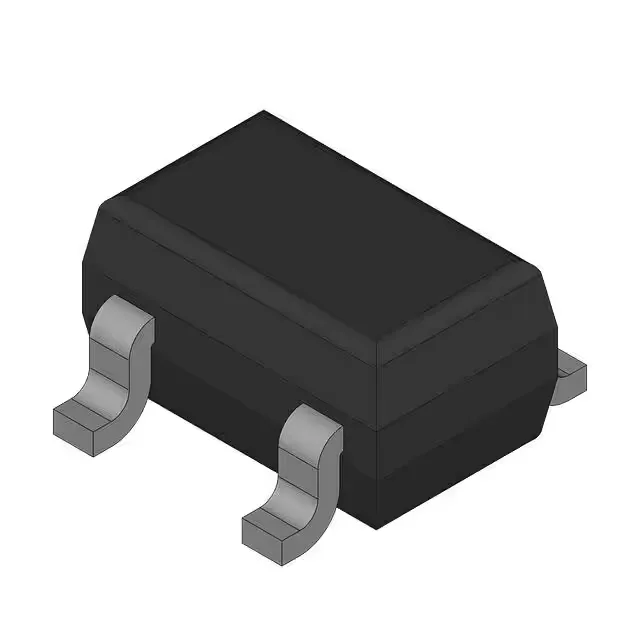
What this comparator brings to the board
It operates from a single supply between 2.25 V and 5.5 V, drawing a maximum quiescent current of 15 µA. That quiescent number is the key spec for a battery-powered rail monitor or a threshold detector that stays on all the time — it won't pull the supply down when the output isn't switching. The push-pull output saves a pull-up resistor, which matters when you're packing this into a tight layout.
What the input bias spec means for high-impedance sensing
Typical input bias current is 0.01 µA. That's low enough to not load a high-impedance source like a thermistor divider or a pH probe buffer. If you're comparing signals from a megohm-range divider, this comparator won't introduce a noticeable offset error from bias current — the 0.01 µA typical figure is the one to design around.