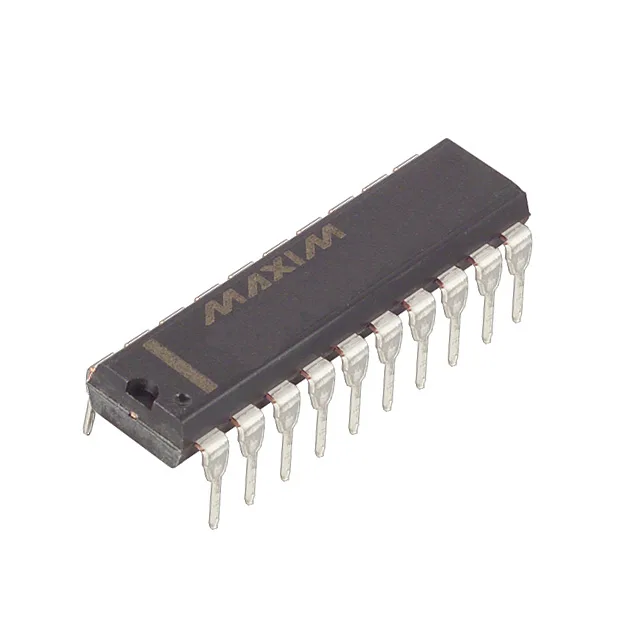
Analog Devices ADC0820CCN+ — Analog & Data Acquisition

ADC0820CCN+ 8-bit Flash ADC, 20-DIP, Through Hole, Active

MPNADC0820CCN+
End of Life

Maxim Integrated ADC0820CCN+, 8-bit Flash ADC, 1-channel, Pseudo-Differential/Single-Ended input, Parallel interface, 20-DIP (0.300", 7.62mm) through-hole package, 0°C to 70°C.

$15.8Ref. price · indicative, final on quote
Packaging20-DIP (0.300", 7.62mm)
RoHSROHS3 Compliant
Sourced new & surplus through independent channelsAuthenticity-screened · ESD-safe packingListing updated Aug 2026

Specifications

ADC0820CCN+ specifications
ParameterValue
Input typePseudo-Differential, Single Ended
MountingThrough Hole
Reference typeExternal
Voltage - supply, analog4.5V ~ 8V
Voltage - supply, digital4.5V ~ 8V
I/O channels1
InterfaceParallel
Operating temperature0°C ~ 70°C
PackageTube
ArchitectureFlash
ConfigurationS/H-ADC
Number of bits8
Case20-DIP (0.300\", 7.62mm)
Ratio - s (H:ADC)1:1
Number of a (D converters)1

Product details

8-bit Flash ADC in a hand-solderable DIP

The Maxim Integrated ADC0820CCN+ is an 8-bit Flash analog-to-digital converter in a 20-pin DIP package (0.300" body, 7.62 mm pitch) — a through-hole part that breadboard and perfboard users can actually hand-solder without a hot-air station. It accepts a single pseudo-differential or single-ended input and outputs data over a parallel bus. The Flash architecture means conversion happens in a single clock cycle, so you get the full 8-bit result without the latency of a SAR or integrating converter. Both the analog and digital supply rails share the same 4.5 V to 8 V range, which simplifies power routing on a dual-supply board.

Package and mounting — through-hole ease

The 20-DIP package with 0.300" row spacing fits standard breadboards and solder-tail sockets. Mounting type is through-hole.

Frequently asked questions

What is ADC0820CCN+'s listed input type?

The ADC0820CCN+ accepts both Pseudo-Differential and Single Ended input configurations. This gives flexibility for single-ended sensor signals or a pseudo-differential connection to reject common-mode noise on the input lines.