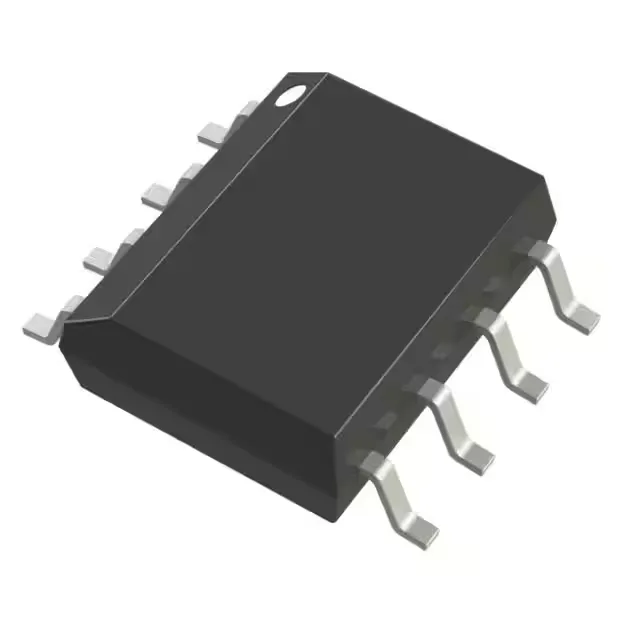
With a 1500 V/µs slew rate and 250 MHz -3 dB bandwidth, it drives the front end of fast ADCs, video distribution amplifiers, or pulse-processing chains that need clean edge rates into capacitive loads. Supply span runs from 6 V to 12 V, and the 16 mA quiescent current is typical for this speed class — not a low-power part, but reasonable for a 250 MHz stage.
The 1500 V/µs slew rate means this amplifier can reproduce a 10 V peak-to-peak output step in under 7 ns, which is essential for driving the input of a high-speed ADC without slew-induced distortion or for maintaining pulse fidelity in a radar or lidar receive chain. The 250 MHz -3 dB bandwidth supports gain of +2 or +1 well past 100 MHz, but the small-signal bandwidth drops with higher closed-loop gain — plan the noise gain and compensation network per the datasheet's recommended values. The 70 mA output current per channel gives enough drive to swing into a 50 Ω or 75 Ω back-terminated load, typical for video or RF distribution.
Cut Tape (CT) is also available for prototype or low-volume builds. Supply voltage range is 6 V to 12 V, so a single 8 V or 12 V rail works, or split supplies like ±5 V. The 2 mV input offset voltage (max) and 2 µA input bias current are adequate for DC-coupled applications, though for precision DC you would look at a lower-offset amplifier — this part is optimised for AC-coupled high-speed paths.
For volume commitments or date-code consistency, a sealed-reel lot with a tight date-code spread is the preferred procurement path.