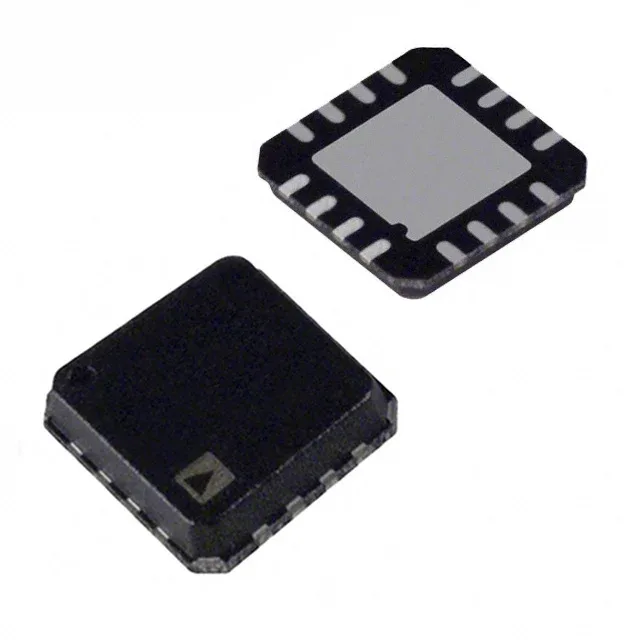
Zero-drift precision in a 4x4 QFN
Typical uses include precision sensor interfaces, medical instrumentation, and weigh-scale front ends where the zero-drift topology eliminates 1/f noise and temperature-induced offset drift.
The 2 µV typical input offset is the headline parameter here. For a 100x gain stage, that translates to 200 µV of DC error at the output before any drift — negligible for most 12-bit systems and workable for 16-bit designs with careful layout. This makes the AD8555 a fit for thermocouple amplifiers, load-cell bridges, and photodiode transimpedance stages where the signal is in the millivolt range and DC accuracy matters.
Package and rework: 16-LFCSP with exposed pad
The 16-lead LFCSP (4x4 mm) with exposed pad is a common footprint for this class of precision amp, but it demands attention at assembly and rework. For hand rework, preheat the board to 150°C, apply flux, and use a hot-air nozzle sized for a 4x4 mm package; the part is small enough that the pad can lift if you dwell too long at 350°C.