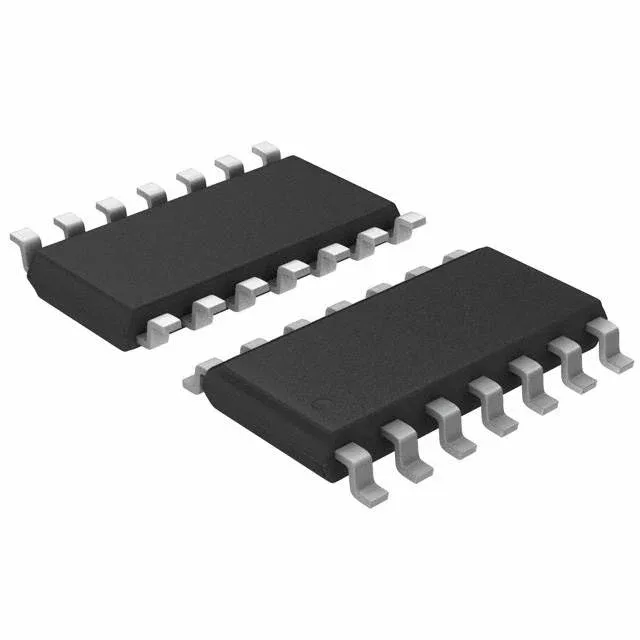
Analog Devices AD824ARZ-14-REEL — Analog & Data Acquisition

AD824ARZ-14-REEL J-FET Quad Op-Amp, Rail-to-Rail Output

MPNAD824ARZ-14-REEL
End of Life

Analog Devices AD824ARZ-14-REEL, quad J-FET op-amp, 2 MHz gain-bandwidth, 2V/µs slew rate, rail-to-rail output, 14-SOIC, -40°C to 85°C.

$14.65Ref. price · indicative, final on quote
Packaging14-SOIC (0.154", 3.90mm Width)
RoHSROHS3 Compliant
Independent supplier — new & surplus stockAuthenticity-screened · ESD-safe packingListing updated Aug 2026

Specifications

AD824ARZ-14-REEL specifications
ParameterValue
Output typeRail-to-Rail
MountingSurface Mount
Amplifier typeJ-FET
Voltage - input offset500 µV
Voltage - supply span30 V
Current - supply560µA (x4 Channels)
Current - input bias4 pA
Current - output (Channel)12 mA
Operating temperature-40°C ~ 85°C
-3db bandwidth2 MHz
Gain bandwidth product2 MHz
PackageTape & Reel (TR); Cut Tape (CT)
Slew rate2V/µs
Case14-SOIC (0.154\", 3.90mm Width)
Number of circuits4

Product details

Four J-FET amplifiers in a 14-SOIC — 560 µA per channel, rail-to-rail output

The AD824ARZ-14-REEL from Analog Devices packs four J-FET input amplifiers into a single 14-SOIC package, each channel drawing 560 µA of supply current.

The 3 V minimum supply span means this quad op-amp can run directly off a single lithium cell or a 3.3 V regulated rail, while the 30 V maximum covers 24 V industrial buses without an extra regulator.

Input bias and offset — J-FET advantage for high-impedance sources

The J-FET input stage delivers a typical input bias current of 4 pA and an input offset voltage of 500 µV. That low bias current is the main reason to pick this part over a bipolar-input quad op-amp: it won't load down a high-impedance sensor output (pH probe, photodiode, piezoelectric accelerometer) or force you to add a buffer stage.

Frequently asked questions

Does AD824ARZ-14-REEL have rail-to-rail output?

Yes, the output type is rail-to-rail, meaning the output voltage can swing to within millivolts of both supply rails. The input common-mode range, however, is not rail-to-rail — it stops about 1.1 V below the positive rail, so high-side sensing at low supply voltages needs a different topology.

What is the slew rate of AD824ARZ-14-REEL?

The slew rate is 2 V/µs, paired with a 2 MHz gain-bandwidth product. This combination is adequate for audio-band signals and slow-slew sensor outputs up to a few hundred kHz, but it will limit large-signal fidelity above roughly 100 kHz peak-to-peak swing.