What a current-sink DAC in die form means for your BOM
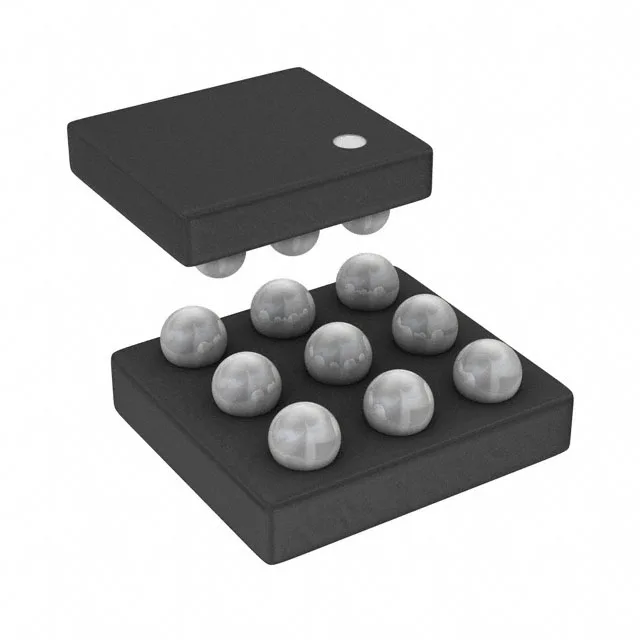
The AD5398BCSURF: Its output sinks current proportional to the digital code, making it a direct fit for applications like laser diode bias control, LED dimming, or programmable current-loop transmitters where a voltage-output DAC would require an external V-to-I converter.
Settling time and linearity — the design-in constraints
Typical settling time is 250 µs to within 1/2 LSB of the final value. For a closed-loop control system updating at 4 kHz, this settling time consumes the full sample window — budget the DAC update into the loop timing rather than treating it as instantaneous. Integral nonlinearity is ±1.5 LSB maximum, and differential nonlinearity is ±1 LSB maximum. At 10-bit resolution (1024 codes), ±1.5 LSB INL means the output code can deviate by up to 0.15% of full scale from the ideal transfer function — acceptable for most current-steering applications but worth verifying if absolute accuracy at a specific code matters.
Because this is a die-form component, sourcing requires handling through qualified assembly partners who can manage die attach and wire bonding.